


Chat with us
9 a.m. - 7:00 p.m. EST
Enter camper details to start the camp registration process and to view available camp dates and pricing
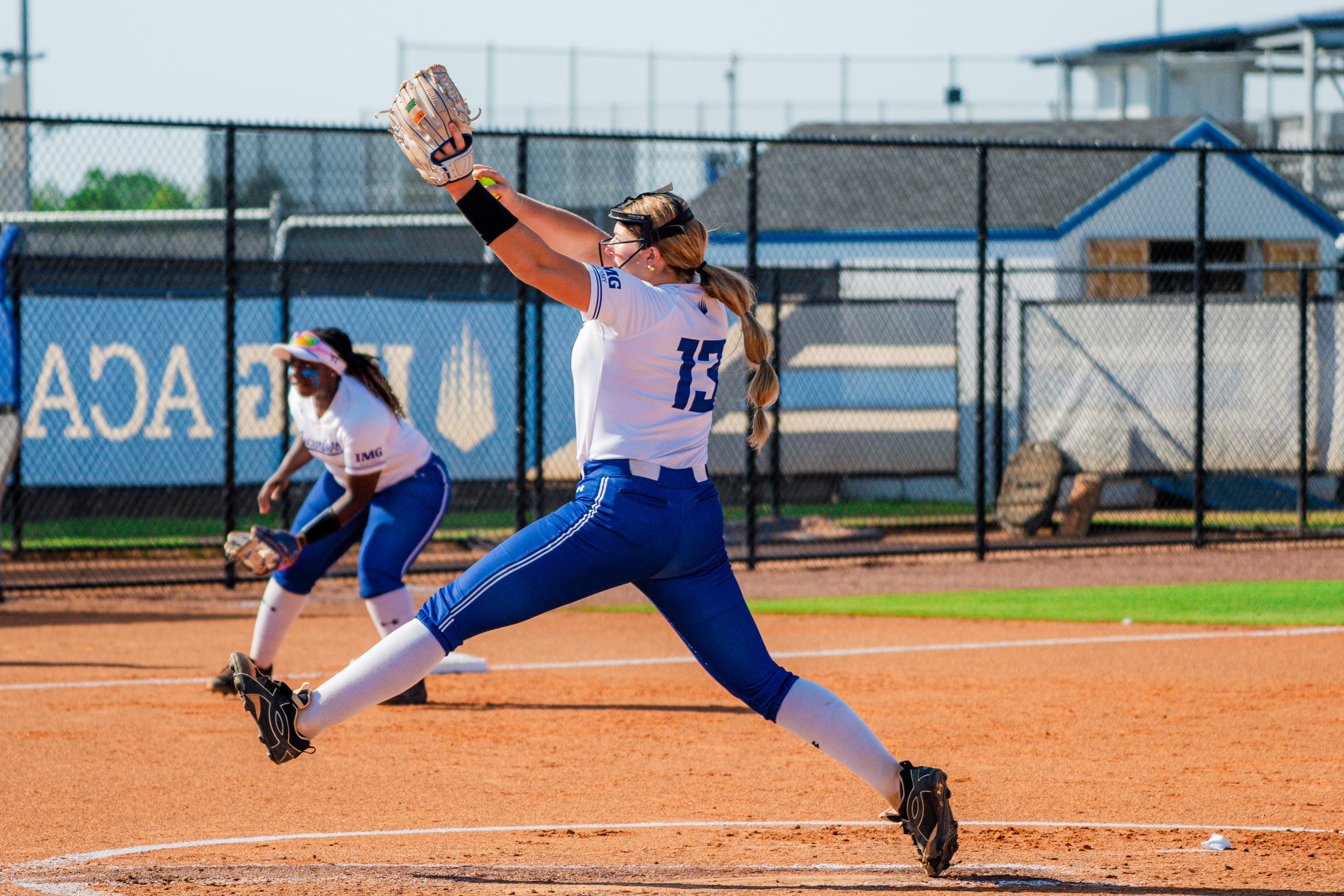
Softball is a game of split-second bursts: a first step off the bag, a rotational swing through the zone, a throw across the diamond on a line. None of that happens by accident. It's built inning by inning, offseason by offseason, through softball strength and conditioning training that prepares a softball player for the specific demands of the sport.
For middle school, high school, and travel ball players hoping to keep playing at the next level, strength and conditioning is vitally important to performance. So how do you optimize your training? And where do you start?
Softball asks a lot of the body in a short window of time. A hitter has to generate rotational power through the core and hips in a fraction of a second. A pitcher repeats a high-velocity arm motion dozens of times per outing. An infielder has to explode into a sprint, decelerate, and change direction, often within the same play.
Strength and conditioning gives athletes the physical tools they need to put more power behind the swing and throw and have faster first-step reactions.
Sophie Henshue, a strength and conditioning coach at IMG Academy who works closely with the softball program, breaks it down by thinking about a specific goal, like improving bat speed, and working backward from there.
Lower-body strength is the engine that produces force, explosive power turns that strength into bat speed, and single-leg training corrects the side-to-side imbalances that build up from repeatedly loading the same back leg on every swing. Layered together with rotational medicine ball work and hip and hamstring mobility, these qualities give an athlete what Henshue calls a toolbox for handling the specific demands of the sport.
Strength and conditioning also plays a direct role in durability and injury prevention. Because softball players load asymmetrically -- batting from one side, throwing from one arm — an underdeveloped or weaker side becomes more vulnerable to injury over time. IMG Academy's softball program uses force plate data to identify those asymmetries and address them directly in the weight room, alongside the mobility work that keeps the hips and shoulders moving well.
See some of the ways that we utilize Force Plates with IMG Academy Baseball:
Strength and conditioning is a structured training approach separate from skill practice that develops an athlete's physical qualities: strength, power, speed, agility, mobility, and endurance.
A well-run program combines resistance training, movement work, and conditioning drills so that the gains made in the weight room actually show up on the field.
The best softball-focused plan doesn't just build general fitness; it targets the rotational power, arm care, and change-of-direction speed the sport requires, and it's personalized to match where an athlete is in their season.
A complete program touches several areas of physical development at once, rather than isolating one at the expense of the others.
Strength is the base that power, speed, and durability are built on. Foundational lifts — squats, hinges, presses, and pulls — teach athletes to move efficiently and produce force, which later translates into bat speed, throwing velocity, and sprint speed.
Single-leg work, such as dumbbell split squats, deserves particular attention in softball because of how much a player loads into a single back leg during a swing; training one leg at a time helps correct the asymmetries that repeated swinging and throwing tend to create.
Softball rarely asks an athlete to sprint in a straight line for very long. More often it's a quick first step, a change of direction, or a burst out of the batter's box. At IMG Academy, speed work is built around the specific situations softball actually demands: getting from home to first as quickly as possible, or accelerating from first to second on a steal attempt. Training focuses on acceleration and running mechanics rather than top-end speed, since most softball sprints never last long enough for top speed to matter.
Good mobility through the hips, thoracic spine, and shoulders allows for a fuller, more efficient swing and throwing motion, and it reduces compensation patterns that can lead to overuse injuries. Rather than treating mobility as a separate block, IMG Academy's coaching staff weaves it directly into lift structure — for example, using the third exercise in a training block for a mobility- or prehab-focused movement, whether that's thoracic spine rotations before a squat day or hip flexor and hamstring work. The idea is to use the touchpoints coaches actually control, since there's no way to know how much mobility work an athlete is doing on their own outside the weight room.
Because throwing is repetitive and high-velocity, the shoulder and elbow are common injury sites for softball players, particularly pitchers and catchers. Structured arm care — rotator cuff and scapular strengthening, throwing progressions, and recovery protocols — helps protect against overuse injuries and supports long-term arm health.
Even without bands or weights, there's a lot an athlete can do at home. Henshue points to two go-to options for players training on their own:
Softball is a stop-and-start sport, so conditioning work should mirror that: short, intense efforts followed by recovery, rather than long steady-state cardio. This kind of interval-based conditioning better prepares athletes for the actual energy demands of a game. In practice, that often looks like dedicated speed sessions built around game-specific situations, such as accelerating out of the box or stealing a base, rather than generic distance running.
The legs and hips generate the majority of power in both the swing and the throw. Squat variations, lunges, hip hinges, and single-leg work build the strength and stability needed for explosive movement in the batter's box, on the base paths, and in the field.
Pulling and pushing strength like rows, presses, and pulldowns support both throwing velocity and bat speed, while balanced upper-body training (equal attention to pulling and pushing muscles) helps protect the shoulder from the wear of repetitive throwing.
Nearly every skill in softball is a rotational movement. A strong, stable core transfers force efficiently from the lower body through the upper body and into the bat or the ball, and it protects the spine from the repetitive rotation the sport demands.
Core work for softball players should hit more than one plane of movement — rotational exercises like Russian twists, and anti-rotation exercises using a resistance band anchored at chest height, both train the trunk to control rotation rather than just produce it, which mirrors what actually happens during a swing or a throw.
The connection between the weight room and on-field performance is direct. More lower-body and core strength means more rotational power behind a swing.
More posterior chain and shoulder strength supports higher throwing velocity and a more efficient arm path. And because strength training also builds joint stability, it helps a hitter or thrower repeat their mechanics consistently over the course of a long game or a long season, rather than breaking down as fatigue sets in.
Rotational medicine ball work — throws, slams, and lateral throws performed in multiple planes — is one of the more direct bridges between the weight room and the batter's box.
Henshue describes the body as one connected engine: lower-body strength provides the force, but medicine ball throws teach an athlete to transfer that force explosively and rotationally, which is exactly what a swing requires.
Base running and defensive range both come down to how quickly an athlete can accelerate over a short distance. Short-sprint work — like going from home to first, or reactive starts out of an athletic stance — builds the specific acceleration softball actually requires, which matters more than long-distance top speed.
IMG Academy's softball program builds dedicated speed sessions into the training week specifically to teach these running mechanics, aiming for athletes to get a little faster every day rather than chasing a single big breakthrough.
Interval-style conditioning that alternates short bursts of effort with recovery periods more closely mirrors the rhythm of a softball game than steady-state running does, and it better prepares athletes for the repeated sprint-recover-sprint pattern of a full game.
Most youth and high school softball players benefit from two to four strength sessions per week, depending on the time of year.
In-season, that often scales down to two to three focused sessions to maintain strength without adding excess fatigue on top of games and practices — travel schedules alone can make in-season frequency unpredictable from week to week.
Off-season, three to four sessions per week (sometimes five, with one built in purely for recovery) allow for more focused strength and power development.
The right frequency depends on age, training experience, and how much on-field and game volume an athlete is already managing — which is exactly why programs are best designed by a qualified strength and conditioning coach rather than followed from a generic template.
| Focus Area | In-Season | Off-Season |
|---|---|---|
| Training frequency | 2–3 sessions per week | 3–5 sessions per week (including a recovery day) |
| Primary goal | Maintain strength and arm health | Build strength, power, and speed |
| Intensity | Lower volume, higher intensity; manage fatigue around games | Higher volume early, shifting toward strength and power |
| Conditioning | Short, sport-specific speed sessions | Broader base-building with sport-specific work layered in |
| Arm care | Daily maintenance and recovery focus | Structured strengthening and throwing progressions |
| Mobility work | Every session, brief | Every session, more developmental |
As Henshue puts it, off-season training is about building volume and foundational strength before competition ramps up, then gradually shifting that volume into more strength- and power-focused work heading into preseason.
Once the season starts, volume comes down and intensity goes up — athletes still touch heavy strength movements, but training also emphasizes fast, explosive work like clean pulls and broad jumps.
Power is the product of strength applied quickly, and it should be layered on top of a solid strength and movement foundation rather than trained in isolation. That means mastering basic movement patterns first — squatting, hinging, pushing, pulling, and landing mechanics — before adding plyometrics, medicine ball throws, or heavier loads.
Progressing gradually, with attention to technique and appropriate rest between high-intensity sessions, is what allows athletes to build real power without overloading developing joints and connective tissue.
Consistency matters as much as any single exercise choice. Training regularly, even at a moderate load, tends to build these qualities more reliably than sporadic, high-intensity efforts.
For athletes training without a coach present to check technique, it's worth choosing exercises that don't require close technical supervision and continuing to emphasize rotational power work like medicine ball throws in multiple planes, since that's one of the more direct carryovers to bat speed.
Skipping a real off-season.
Playing softball year-round without any structured time away from the sport increases overuse injury risk and can lead to burnout.
Training the swing but not the whole body.
Focusing only on hitting and throwing reps without building underlying strength leaves athletes more injury-prone and limits long-term progress.
Neglecting core and explosive power training in multiple planes.
It's common for motivated athletes to gravitate toward simply lifting heavier, while mobility and prehab work gets pushed aside. Henshue notes this is one of the more frequent gaps she sees: an athlete might consistently deal with a tight hamstring or a tight low back, but if that isn't specifically addressed, the underlying problem never actually gets solved, and the athlete stays more exposed to injury.
Ignoring arm care.
Treating shoulder and elbow health as an afterthought rather than a daily habit is one of the most common contributors to overuse injuries in throwers.
Copying a generic program.
Following a workout built for another sport, or another athlete, instead of a plan designed around softball's specific movement demands and an individual athlete's stage of development.
Overtraining conditioning at the expense of recovery.
More is not always better; recovery, sleep, and appropriate rest are part of the training plan, not outside of it.
For athletes who don't have access to a dedicated strength and conditioning coach, a structured camp environment can fill that gap. At IMG Academy, softball training integrates on-field skill instruction with strength and conditioning, speed and agility, and arm care and injury prevention led by the dedicated strength and conditioning team and the same holistic model used with IMG Academy's boarding school student-athletes.
Camps also offer optional specializations, so a family can choose to add extra strength and conditioning, mental performance, or nutrition-focused sessions on top of core softball training.
For athletes further along in their development, options like the softball camp and dedicated strength and conditioning camp or speed and agility training specializations offer a way to get expert-led programming in a short, focused window.
Joey Lye, Director of Softball at IMG Academy, emphasizes how much of an athlete's long-term durability depends on training the whole athlete rather than just the swing. She notes that some of the softball players she's seen with the longest careers were the ones who learned to lift properly, build real off-seasons, and treat their bodies as athletes first, not just softball players.
Henshue echoes that same philosophy from the weight room floor. Her approach with athletes isn't just about pushing them to lift heavier — she and the coaching staff make training sessions genuinely enjoyable, while holding onto the mindset that how an athlete trains is how they'll perform. What happens in the weight room is meant to directly translate into the tools a player needs to be better on the field, so missing that opportunity in training is a missed opportunity in the game itself.
Work with a qualified strength and conditioning coach when possible, especially for younger or developing athletes.
"Have a mindset that knows what you're given in your lift program is going to be what gives you the tools to be a better softball player,” said Henshue. “Because at least Coach McKenzie and I, we do push our girls and they love that. We have a really fun time in the weight room. Our sessions are always a good time. But I think from a strength and conditioning perspective, just keeping that mindset of how you do one thing is how you do everything. So, what you do in the weight room is directly going to help you and give you the tools you need to be a better softball player. So, if you're missing that opportunity, you will miss that opportunity.”
A combination of lower-body strength (squats, lunges, hinges, and single-leg work), upper-body pulling and pushing work, and multi-plane core and rotational strength gives softball players the most complete foundation for hitting, throwing, and fielding.
Power should be built on top of solid strength and movement fundamentals — mastering basic patterns first, then progressively adding plyometrics, rotational medicine ball work, and speed work under the guidance of a qualified coach.
Most players benefit from two to four sessions per week, with lower frequency (roughly two to three sessions) and volume during the competitive season and a heavier training load — often three to five sessions, including a dedicated recovery day — in the off-season.
Interval-style, sport-specific conditioning that mirrors the sprint-and-recover pattern of a game — including dedicated speed and acceleration sessions built around real in-game situations like stealing a base — is generally more effective for softball players than long, steady-state cardio.
Yes. Lower-body and core strength drive rotational power behind the swing, while upper-body and shoulder strength support throwing velocity and help protect the arm from overuse.
Whether your athlete needs a foundation in strength and conditioning or a full training experience, IMG Academy's programs are built to develop the whole player — on and off the field. Explore IMG Academy's softball camps or learn more about strength and conditioning training to find the right fit for your athlete's next step.
Discover the opportunities available at IMG Academy to help your student-athlete reach their full potential
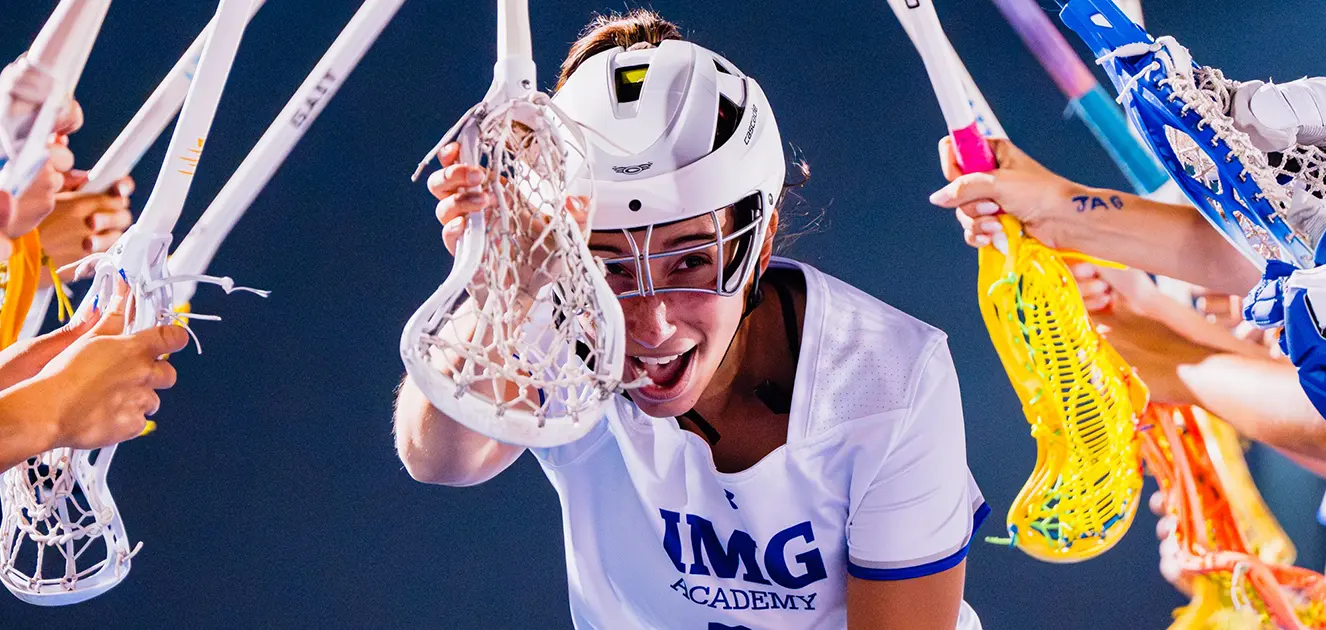
Discover the opportunities available at IMG Academy to help your student-athlete reach their full potential
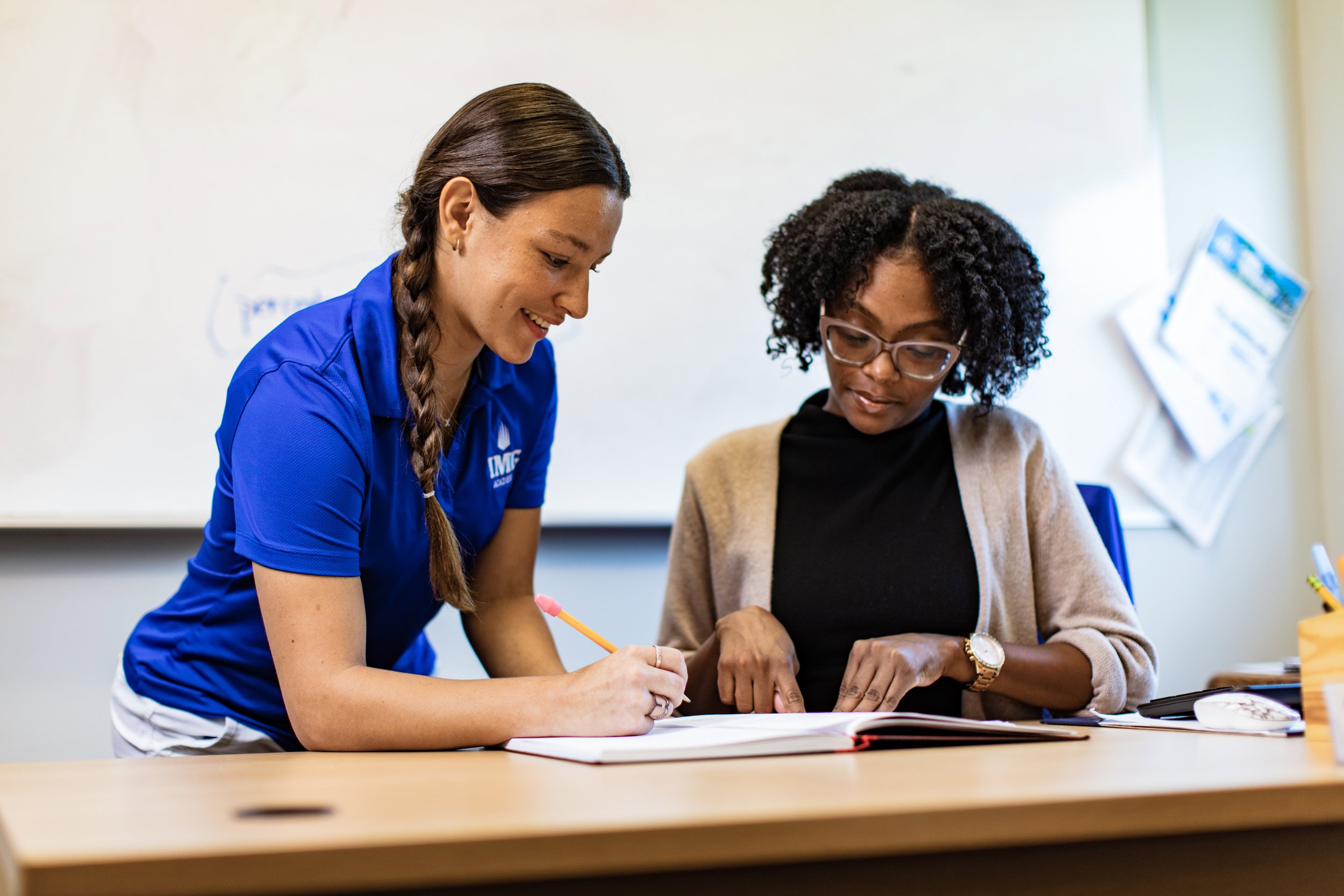
Explore IMG Academy world-renowned academic and athletic programs.
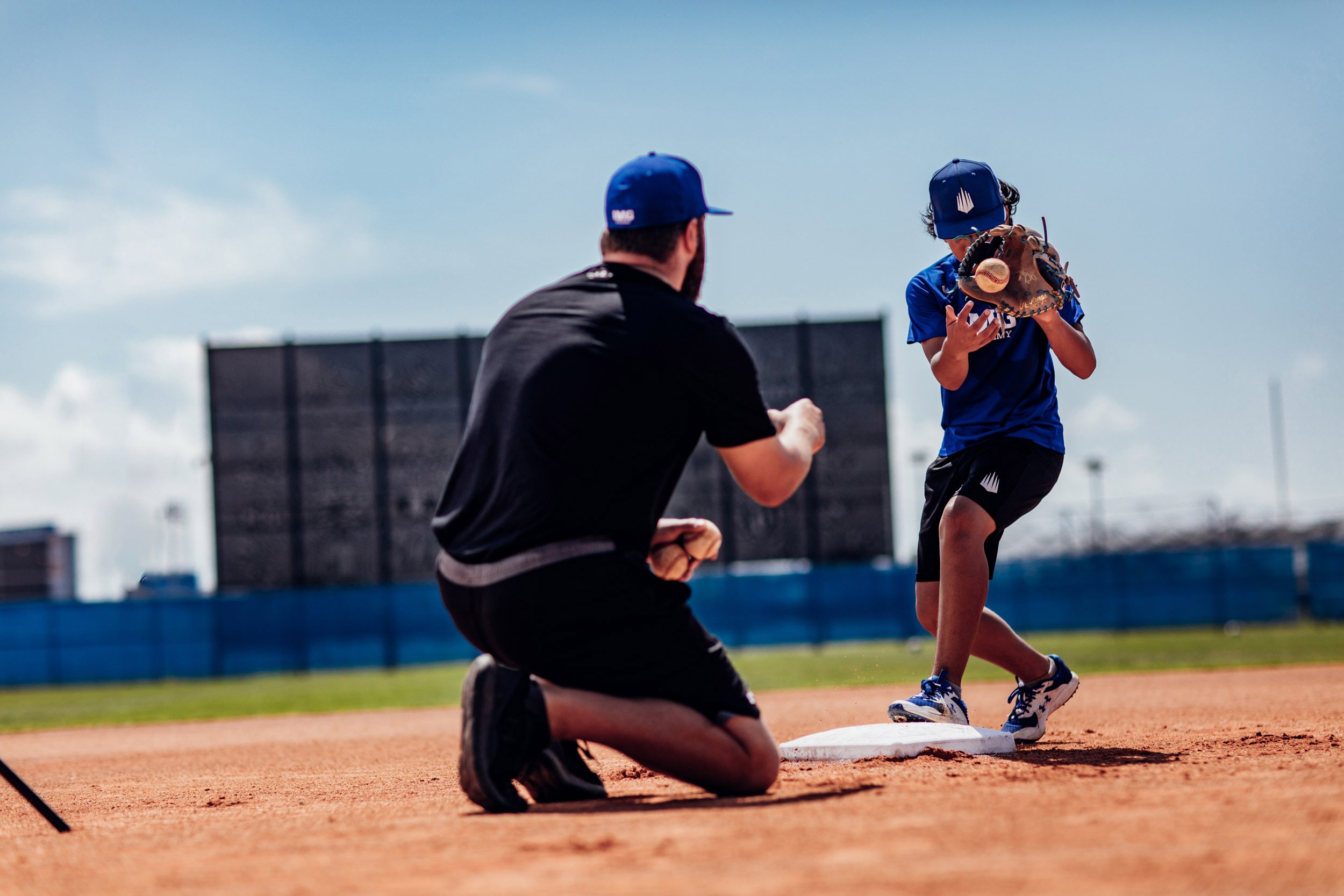
Explore IMG Academy's year-round sport camps and training programs.

Learn about online Mental Performance and Nutrition coaching.

Learn about NCSA College Recruiting and how to prepare for the next level.
9 a.m. - 7:00 p.m. EST