


Chat with us
9 a.m. - 7:00 p.m. EST
Enter camper details to start the camp registration process and to view available camp dates and pricing
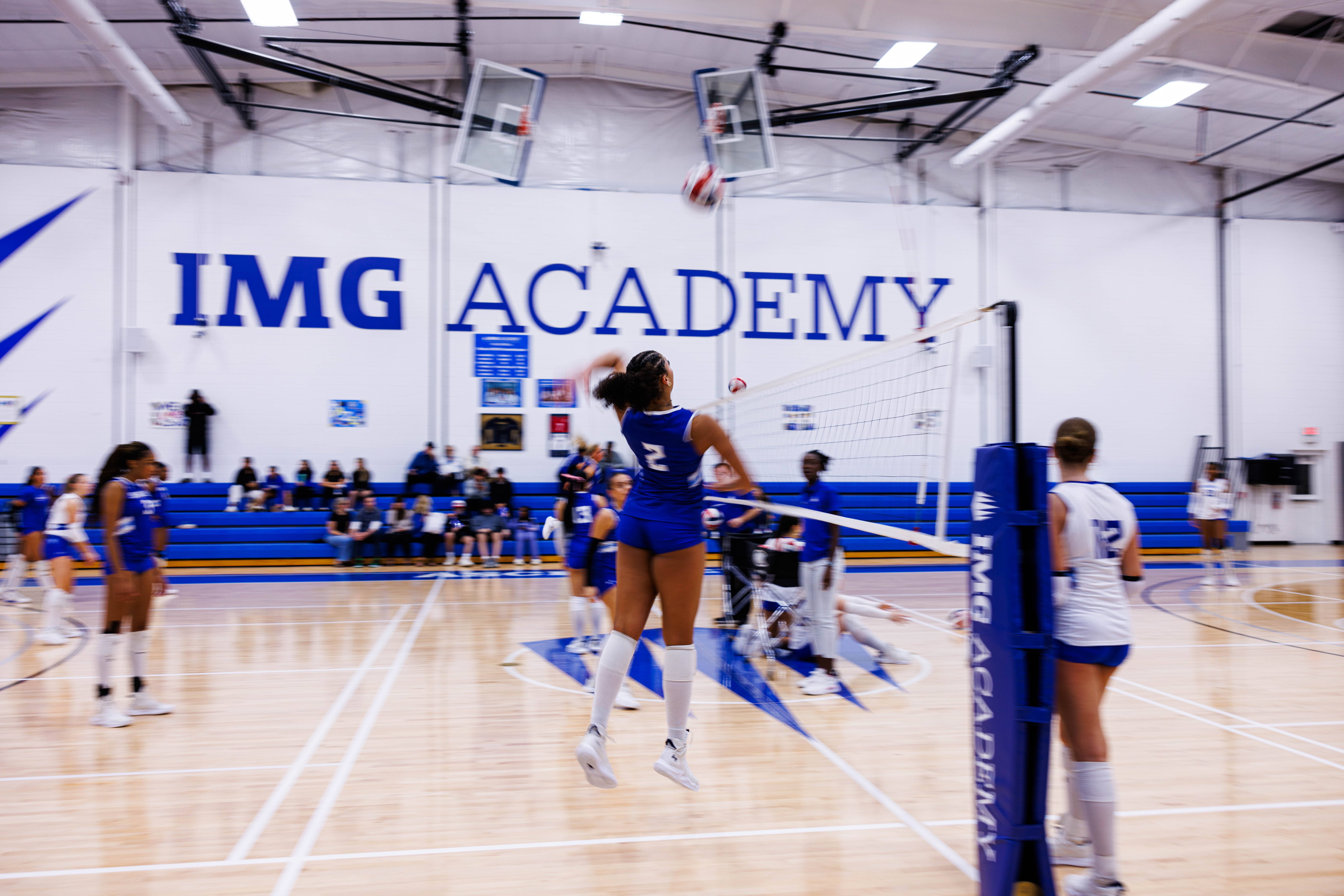
Volleyball is a sport of explosive, repeated efforts: a jump to attack, a jump to block, a dive to save a ball that looked unplayable. None of that happens by chance. It's built through volleyball strength and conditioning training designed around the specific physical demands of the sport and around the athlete doing the training.
For middle school, high school, and club volleyball players working toward the next level, strength and conditioning is one of the most important pieces of long-term development. Here's what that training actually looks like, and why it matters.
Volleyball asks a lot from the body in short, repeated bursts. A hitter needs to jump, generate power through the shoulder, and land safely, repeatedly, in the same match.
A libero needs to react instantly, drop low, and absorb force through the body without breaking down.
A blocker needs explosive vertical power on demand, point after point.
According to Lesley Sommerfield, an IMG Academy strength and conditioning coach who holds a PhD in youth athlete development, the goal of a training program isn't just to make athletes stronger, it's to develop healthy, resilient, high-performing athletes as a whole.
That means building a strong foundation first: movement quality, technical proficiency, and mastery of fundamental movement patterns before progressing to more advanced training.
It also means recognizing that every athlete is at a different stage of physical maturity, so a program has to be developmentally appropriate and individualized rather than applied the same way to every player.
Strength and conditioning built this way does more than improve performance. It also plays a direct role in injury prevention, durability, and building lifelong training habits that serve an athlete well beyond a single season.
Volleyball strength and conditioning is a structured, progressive, and evidence-based approach to physical development, separate from volleyball skill work on the court.
Rather than a generic fitness routine, it's built around what volleyball specifically requires: explosive vertical power, fast multidirectional movement, shoulder health, and the ability to repeat high-effort actions across a long match, and a long season.
A well-designed program develops an athlete's strength, power, speed, agility, coordination, and durability together, while also supporting the discipline, accountability, and growth mindset that carry over into competition and life beyond the sport.
Jumping is central to volleyball, whether attacking, blocking, or serving. Power in the vertical jump comes from the same foundational strength work that supports every other movement in the sport including squats, deadlifts, and other big lower-body lifts build the raw strength that explosive jump training then converts into height and speed off the ground.
Volleyball rarely asks an athlete to move in a straight line for very long. Court movement is short, reactive, and multidirectional. Speed and agility training ties directly back into strength work, since lower-body strength is what allows an athlete to push off quickly in different directions.
On top of that foundation, warm-ups and drills that incorporate sprinting, direction changes, ladders, and hurdles help sharpen quickness, while reaction-based games — for example, one athlete trying to tag a partner while avoiding being tagged — train an athlete to react and think on the move rather than simply repeat the same movement pattern.
Strength is the base everything else is built on. Squats, deadlifts, and other compound lifts develop the raw force production an athlete needs, while stability work ensures that force translates into controlled, efficient movement on the court rather than compensation patterns that increase injury risk.
Shoulder mobility and stability are especially important in volleyball given the demands of serving, passing, and hitting.
Ankle mobility matters as well, both for jumping mechanics and for the quick cuts and landings volleyball requires throughout a match.
Because volleyball places repeated stress on the shoulders, knees, and ankles, injury prevention has to be built directly into training rather than treated separately. This means training has to specifically address ankle and knee stability, along with shoulder health, to keep athletes on the court and out of the training room.
The legs and hips generate power behind every jump. Squats, deadlifts, and other big lower-body lifts build the strength foundation that later translates into a higher vertical jump and faster movement in every direction on the court.
Shoulder strength and stability are critical for volleyball players, given how much of the sport's core skills: serving, passing, and hitting — depend on repeated, high-velocity shoulder movement. Balanced upper-body training supports both performance and shoulder health over the course of a long season.
Volleyball is full of rotational movement and awkward, off-balance positions including diving for a ball, twisting to make a play. Strong core control allows an athlete to stay stable in those positions and reduces injury risk when the body is forced into less-than-ideal positions mid-play.
Coach Sommerfield builds core training around two main qualities: anti-rotation work, since so much volleyball involves resisting rotation rather than creating it, and bracing work, which trains an athlete's ability to absorb force and rebound quickly.
In practice, that might look like partner resistance drills, plank variations where an athlete has to reach out for a high-five or toss a ball while maintaining position, or other movements that challenge stability under a real, changing load.
Vertical jump improvement starts with the same foundation as every other physical quality in volleyball: strength. Squats and deadlifts build the raw lower-body force production that explosive training — jump training, plyometrics, and reactive drills — then converts into a higher, faster jump.
It's worth noting that more jump training isn't always better; piling on excessive volume can leave an athlete fatigued rather than more explosive, which is why jump work is programmed carefully alongside recovery, not stacked without limits.
Volleyball conditioning should reflect how the game is actually played: short, explosive efforts rather than long, steady movement.
Training incorporates sprinting, direction-change drills, and reactive game-based work that mirrors the stop-start, multidirectional nature of a real match, and this work is often adjusted day-to-day based on what a team's coach has planned for practice.
Volleyball tournaments can be demanding in a way that's easy to underestimate. Club athletes might play nine or ten matches over a single weekend, which creates significant cumulative fatigue. Conditioning work must prepare athletes for that reality, building the capacity to perform consistently across a long match and a long tournament weekend, not just a single game.
How often a volleyball player should be in the weight room depends heavily on the time of year and the training age of the athlete. Because most volleyball players move almost directly from a high school season into club season in the spring, with a relatively short off-season in between, the frequency and focus of training has to adjust to match the competition schedule.
| Focus Area | In-Season | Off-Season |
|---|---|---|
| Primary goal | Maintain strength; emphasize power and explosiveness | Build strength; ramp up conditioning and jump training |
| Training intensity | Moderate; avoid strength dips while managing match fatigue | Progressive overload; can push harder |
| Jump training | Managed carefully around competition volume | More volume, built up gradually |
| Injury prevention focus | Ankle, knee, and shoulder health as a daily priority | Building overall robustness and resilience |
| Coordination with coaches | Close communication on what to back off vs. push through | More flexibility to load training |
As Coach Sommerfield explains it, the off-season is when a program can really push strength gains, ramp up conditioning, and add more jump training, always in coordination with sport coaches to avoid overloading an athlete.
Once the season starts, the emphasis shifts: rather than chasing new strength gains, the priority becomes maintaining strength while focusing on power and explosiveness — moving quickly and jumping higher, without sacrificing the strength base already built.
Volleyball is a full-body sport, and no single muscle group works in isolation. That said, a few areas stand out as particularly important:
Asked directly about which muscles matter most, Coach Sommerfield pointed to glutes, hamstrings, shoulders, and core as the biggest priorities, while emphasizing that volleyball ultimately demands development across the entire body.
Yes — and the evidence for it goes beyond theory. At IMG Academy, coaches track a target participation rate, aiming for roughly 85% of athletes to be available to play at any given time.
During a season with reduced in-season strength training, that participation rate dropped below the target as injuries increased. Once strength training was reintroduced during the season, participation returned to the target level.
That outcome reflects a broader principle: strength training builds the robustness and resilience athletes need to stay on the court, rather than putting them at risk. This matters especially for female athletes, who don't experience the same testosterone-driven strength gains that male athletes do through puberty, which makes structured strength work an important tool for building force production and durability that wouldn't otherwise develop on its own.
In-season strength and conditioning at IMG Academy is coordinated closely with sport coaches to determine, week to week, what to push and what to scale back.
One of the most common mistakes isn't a lack of effort — it's the opposite. Athletes often feel they need to be constantly playing, training, or chasing gains like a higher vertical jump, without building in real rest. Overdoing volume, especially with jump training, tends to leave athletes in a fatigue hole rather than producing the gains they're chasing.
Recovery isn't just about rest — it's about actively using the resources available, including nutrition support, mental performance coaching, and athletic training, to help the whole body recover, not just the muscles that feel sore.
Reducing or cutting strength work during the season can increase injury risk rather than protect against it, since it's the ongoing strength stimulus that helps keep athletes durable through a long competitive schedule.
A program that isn't developmentally appropriate — one that doesn't account for an athlete's stage of physical maturity or individual needs — misses the point of long-term athlete development.
For athletes who don't have access to a dedicated strength and conditioning coach, a structured camp or training program can close that gap.
At IMG Academy, volleyball training integrates on-court skill work with the same evidence-based, individualized strength and conditioning approach used with the program's boarding school student-athletes, guided by a coaching staff that includes specialists trained in long-term athlete development.
The strength and conditioning team works in coordination with volleyball coaches to build training that supports the current phase of a player's season, whether that's building a foundation in the off-season or maintaining power and explosiveness during competition.
For families looking for a deeper, more immersive experience, a dedicated volleyball camp or performance camp offers a way to combine skill development, strength and conditioning, and recovery support in one focused environment.
IMG Academy Essentials also offers training and injury prevention. Start with a free trial here.
Foundational lower-body lifts like squats and deadlifts, upper-body and shoulder strengthening for hitting and serving, and core work focused on anti-rotation and bracing give volleyball players the most complete physical foundation for the sport.
Vertical jump improves when explosive jump training and plyometrics are built on top of a solid lower-body strength foundation, progressed carefully so that added training volume doesn't outpace an athlete's recovery.
Conditioning frequency should shift with the season — more volume and a bigger training push in the off-season, with a shift toward maintaining power and explosiveness once high school and club competition are underway.
The sport demands full-body development, but the glutes, hamstrings, shoulders, and core are especially important for power, control, and injury resilience.
Yes. In-season strength training supports injury prevention and durability, and reducing it during the season has been associated with increased injury rates and reduced athlete availability.
Whether your athlete is looking to build a strength foundation or fine-tune explosive power for the court, IMG Academy's boys and girls volleyball programs are built to develop the whole athlete — on and off the court. Explore IMG Academy's volleyball camps or learn more about our boarding school program to find the right fit for your athlete's next step.
Discover the opportunities available at IMG Academy to help your student-athlete reach their full potential

Discover the opportunities available at IMG Academy to help your student-athlete reach their full potential
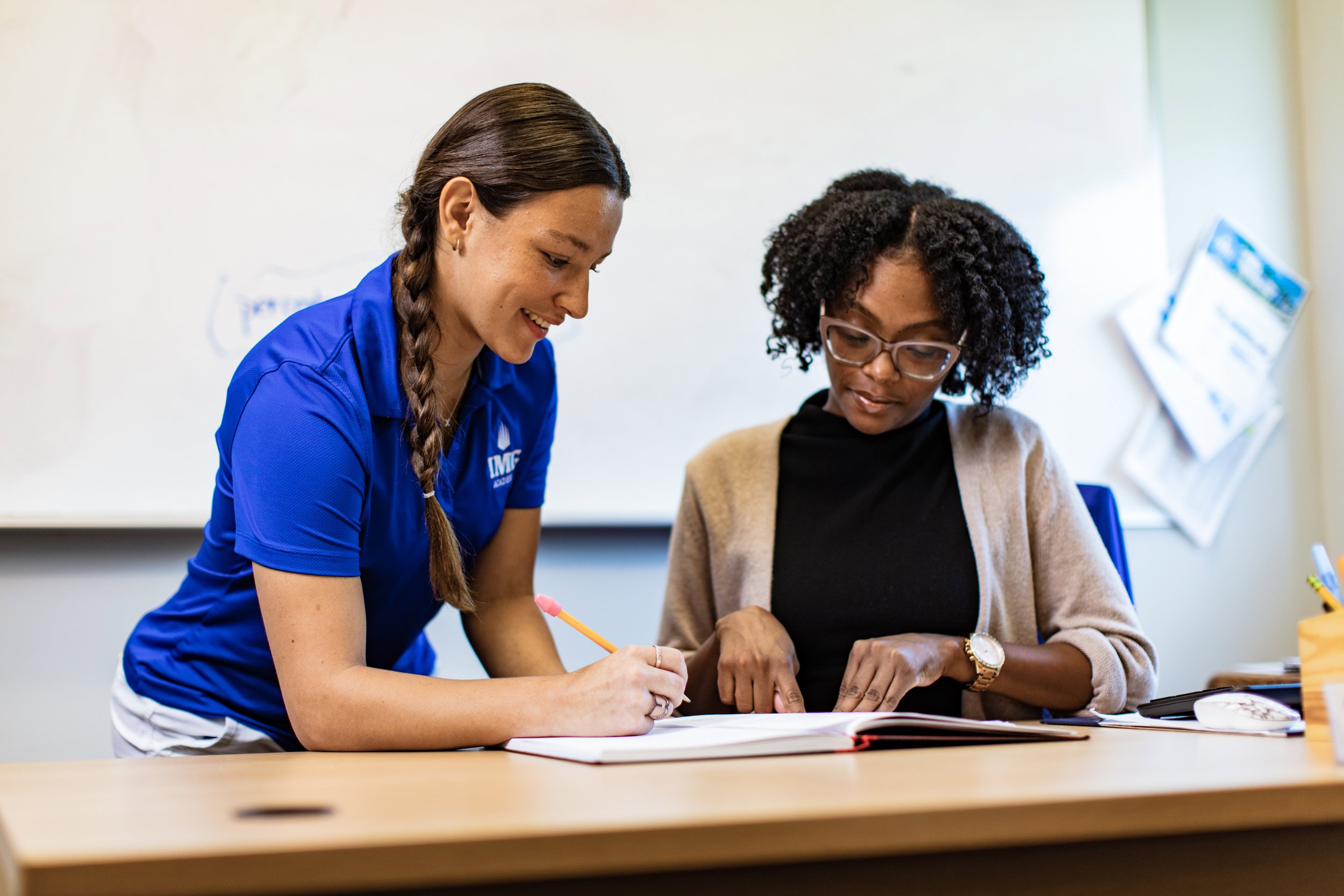
Explore IMG Academy world-renowned academic and athletic programs.
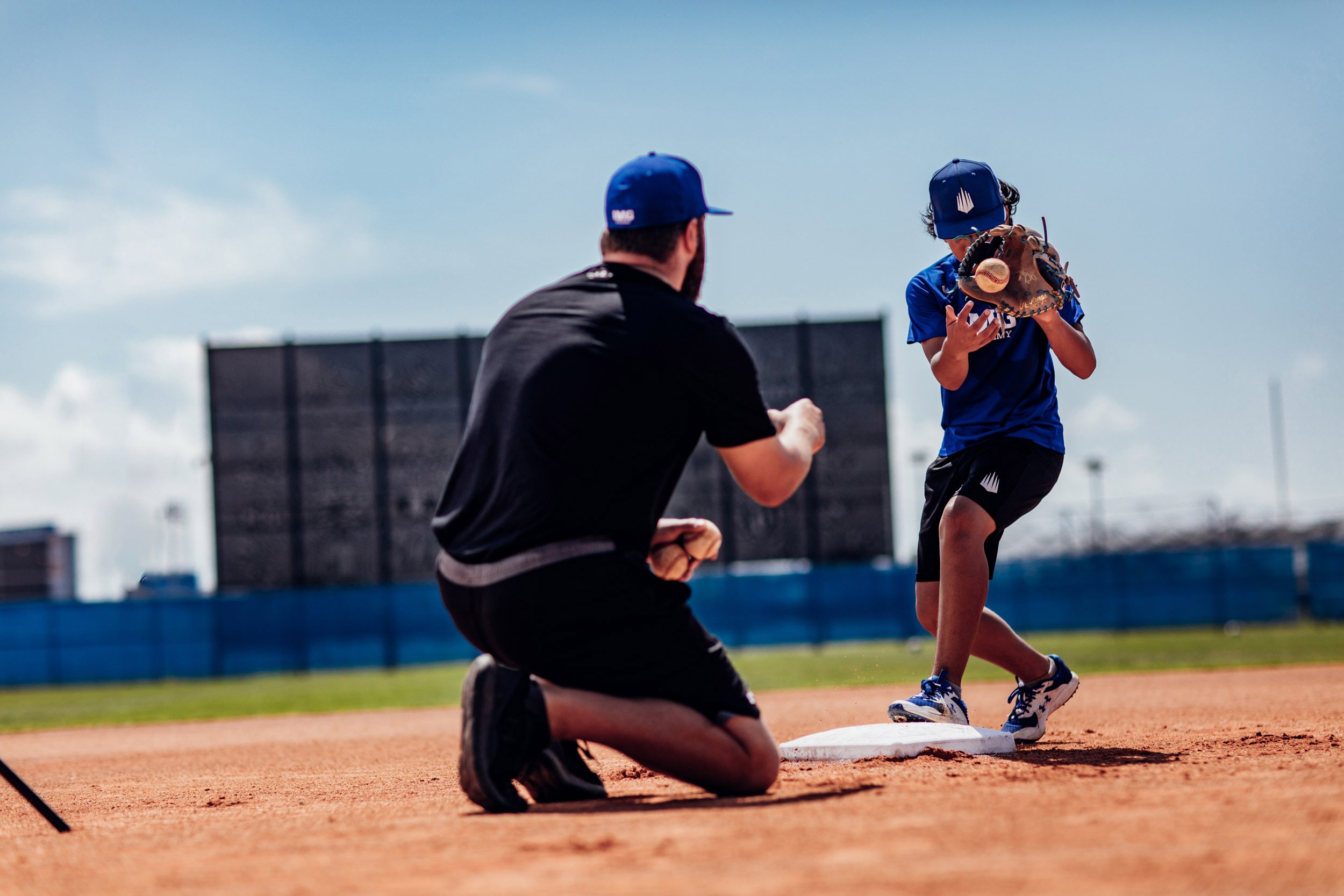
Explore IMG Academy's year-round sport camps and training programs.

Learn about online Mental Performance and Nutrition coaching.

Learn about NCSA College Recruiting and how to prepare for the next level.
9 a.m. - 7:00 p.m. EST