Tips for Golfing: How to Improve Your Swing, Putting, and Mental Game
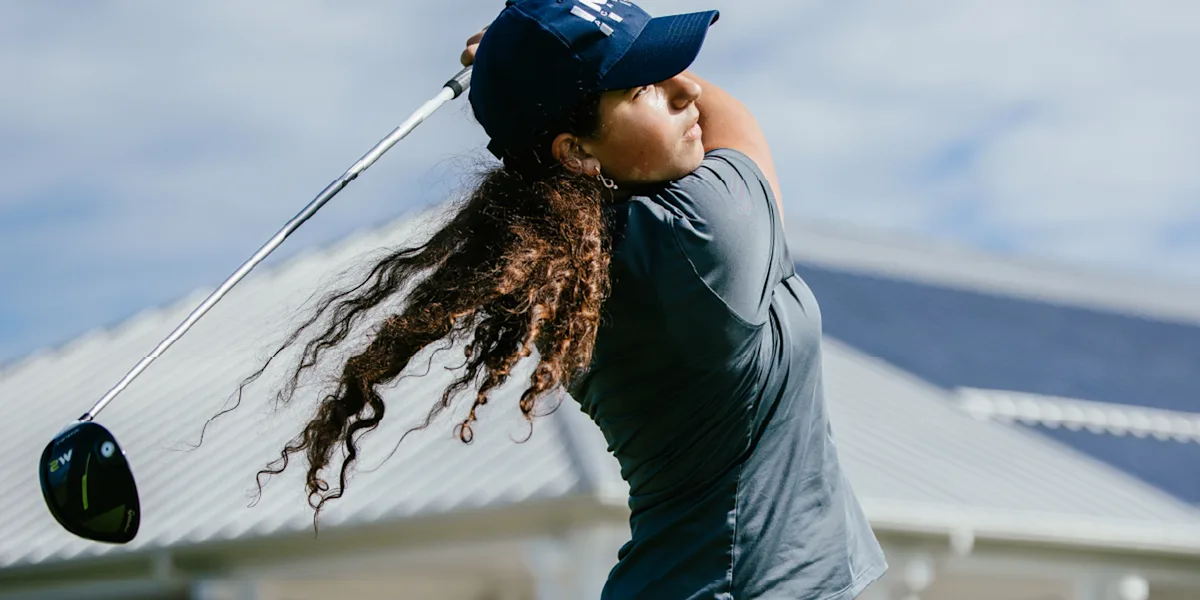
Lower scores rarely come from fixing just one part of your game. Improving your golf swing is just as important as mastering the mental game, especially when a round gets tough.
Many junior golfers spend a lot of their practice time on the full swing, since that’s what everyone notices on the range. But a missed short putt or a blown-up hole that carries over into the next one adds strokes just as fast as a poor drive. Building a complete game, one with fundamentals that hold up when the round gets tight, is what moves your scores.
That means spreading your practice time across every part of your game, not just logging extra reps on the range.
Below are golfing tips designed to help you swing and putt better while building mental fortitude out on the course.
Key Takeaways
Getting better at golf means addressing every part of your game, from first swing to last putt.
A repeatable swing starts with sound fundamentals. That means dialing in your grip, setup, and tempo.
Putting and shots around the green deserve regular practice.
A pre-shot routine helps you focus on the shot in front of you instead of the pressure around it.
Developing a strong golf mental game helps you reset after mistakes and prevents one bad hole from changing your whole round.
Long-term improvement starts with clear goals and practice that targets the weakest parts of your game.
How to Build and Improve Your Golf Swing
A strong and repeatable golf swing starts with the basics. For young golfers, the foundation usually comes down to three things:
How you hold the club
How you set up to the ball
How consistently you move through the shot
Your grip affects your connection to the club. Gripping too tightly adds tension to your hands, which can slow the club down and hurt your control.
From there, check your setup. Start each shot from a balanced, athletic position you can repeat every time. When your posture or alignment shifts from shot to shot, it creates different swing patterns and makes consistency harder.
Tempo matters, too. You don’t need to swing as hard as you can on every shot. A controlled rhythm helps you return to familiar positions and make solid contact.
A golf coach can help you find the one fundamental that needs attention instead of piling on 10 things to think about at once. "Fundamentals are the base everything else gets built on, which is why developing them early matters so much," said Kevin Craggs, IMG Academy Director of Golf. "But that doesn’t mean making every young golfer look the same. Good coaching gives them something solid enough to repeat, with enough freedom for their own game to grow from it."
Looking for a place to start?
Golf drills like these from IMG Academy+ Essentials can help young golfers with the foundational skills to build a sound swing.
For more, check out this video of IMG Academy Senior Golf Instructor Shane Reiser demonstrating the basics of a proper and powerful golf swing.
Putting and the Short Game That Lowers Scores
You can consistently hit great drives and still rack up a high score. That’s why the short game deserves a place in your practice plan.
When you practice putting, don’t just drop a handful of balls and hit the same putt on repeat. Instead, place balls at different distances and trajectories from the hole. Then, use the PACE method in this video, as demonstrated by IMG Academy coach Scott Bettger.
The PACE method follows these steps:
Plan: Read the green before you commit. Check the slope, which way it breaks, and whether the putt runs uphill or downhill. Walk around the putt to see it from multiple angles.
Aim: Find the apex, the high point where the ball will start to curve toward the hole. Use a training aid, like a coin or a multi-colored ball, to line your putter face up with that spot.
Calibrate: Look at your target and get a feel for how much speed the putt needs to cover the distance.
Execute: Trust your read. Take one last look at the apex, then strike the ball.
This kind of practice builds both technique and decision-making, which will help you putt better overall. Try simple challenges, like making a set number of short putts before moving on or finishing a group of putts within a target distance of the hole.
Around the green, chipping and pitching are where you can save strokes. Practice from different lies and distances so you get comfortable choosing between a bump-and-run and a higher-lofted shot.
Need a place to start? Check out this video where IMG Academy coach Keith Kralis demonstrates different chipping drills, which are designed to make your short game more consistent.
The Golf Mental Game: Focus, Routine, and Pressure
Your golf mental game is part of every swing you take. The challenge is learning how to direct your attention toward what you can control. Mental performance coaching can help you build this skill instead of hoping it develops on its own. "Mental skills are what allow you to manage your thoughts and emotions, so the best of you can show up when the best of you is required," said Craggs.
A repeatable pre-shot routine gives you something familiar to return to when pressure builds. Keep it simple enough to use on the first tee and the final hole.
Your routine might include:
Picking a target
Taking a practice swing
Stepping into the shot
Committing to your decision
Pressure can pull your attention toward results, causing you to think about your score or what other people expect. When that happens, bring your focus back to the shot in front of you. In other words, try to focus on what you can control: your target, your technique, and your swing.
You’ve probably had moments where you were so locked in that everything felt easy and your mind was quiet. That’s called flow state, which is what happens when you're so focused on what you're doing that everything else fades out. Your mind stops jumping between thoughts, your actions start to feel automatic, and time can seem to speed up or slow down.
A pre-shot routine won't force you into flow state, but it can set the conditions for it. By giving your mind a specific process to focus on, a good routine crowds out distracting thoughts and helps you stay present, which is exactly what flow needs to happen.
Bouncing Back from a Bad Hole
Every golfer hits bad shots. What happens next makes the difference.
"A bad hole only becomes a bigger problem if you allow it to consume you," said Craggs. "Even the best players in the world make mistakes. What separates them is their ability to reset, accept what’s happened, and move on to the next shot."
A poor hole becomes a problem when you carry frustration to the next tee. Instead of replaying the mistake in your head, use a short reset routine.
First, acknowledge what happened. You don't need to pretend the shot was good. In a neutral tone, name objectively what happened. For example, think to yourself: I took my eye off the ball on the drive, and it hooked left.
Then take a breath and shift your attention to the next task. Ask yourself: What can I control on the next shot? For example, I will make a conscious effort to keep my eye on the ball from start to finish of my swing.
You can also use the walk between holes as a transition. Leave the previous hole behind you instead of carrying its score into every decision that follows.
Developing a good reset is one of our top golfing tips for improving your game. After a round, don’t just think about the mistakes. Think about what you did after them. That habit is what can keep you from spiraling.
How IMG Academy Develops Complete Golfers
Getting better at golf takes more than good mechanics. IMG Academy builds a complete training regimen that addresses your swing, short game, and mental game.
IMG Academy+ Essentials offers on-demand mental performance content you can work through at your own pace, covering focus, resets, and the mental side of competing under pressure. If you want more personalized support, IMG Academy+ Personal Coach connects you with a live, one-on-one mental performance or nutrition coach for sessions built around your specific game and goals, with ongoing check-ins to track your progress.
For golfers who want to train in person, IMG Academy's golf camps offer hands-on coaching in a competitive environment. Our golf boarding school program brings golf training, academics, and daily development together on one campus for student-athletes ready to commit to the sport full time.
Conclusion: Playing Your Best Golf Game
Lasting improvement comes from following golfing tips that improve your swing, your short game, and your mental game.
To build those mental skills, start small. Pick one thing to focus on this week. For example, try adding pressure putts to your practice, or try a new reset routine in between shots. Keep consistent and focus on using proper technique.
From there, IMG Academy can help you build on that progress. IMG Academy+ Essentials gives you on-demand resources to build from right now. And if you want a coach in your corner to help with mental performance and nutrition, IMG Academy+ Personal Coach gives you access to one-on-one mental performance and nutrition coaching.
Frequently Asked Questions
How do I balance working on my swing, putting, and mental game?
Start by looking at where you lose the most strokes or confidence during a typical round. If your swing causes you trouble, that may deserve more attention. If you hit the ball well but miss too many short shots, spend more time on putting. A balanced golf coaching plan can include focused swing work, short-game practice, and a few minutes of mental preparation.
Which part of my game should I fix first to lower scores fastest?
Look for the problem that shows up most often on the course. For many junior golfers, putting and the short game are places to save strokes. Still, where to focus depends on your own game. If you’re having trouble pinpointing the problem, consider working with a golf coach who can help diagnose the issue.
How do I keep my swing from falling apart under pressure?
Develop a strong mental golf game that allows you to focus on simple cues during your swing and trust the routine you’ve developed. Pressure can make golfers rush or start searching for mechanical fixes in the middle of a round. Use your pre-shot routine to pick a target and commit to the shot. Focus on what you can control instead of forcing a perfect result. The more familiar your routine is in practice, the easier it is to come back to when you’re feeling pressure.
How much of scoring is mental versus mechanical?
Golf doesn’t split neatly into a mechanical side and a mental side. Your mechanics matter, but your decisions and responses to mistakes affect how well you use those skills on the course. A strong swing can still produce poor results if you lose focus or let frustration affect your next shot. At the same time, confidence can't replace solid fundamentals. Develop both, so your physical skills have a better chance to show up when the round gets hard.
How do I practice putting in a way that transfers to the course?
To get better at putting, practice from different positions and distances instead of hitting several balls from the same spot. For each shot, use the PACE method to develop a pre-putt routine that’s meant to keep your attention focused and technique clean:
Plan: Walk around the putt to get a feel for the green’s slope and which way it breaks.
Aim: Line your putter up with the apex of the shot (i.e., the point where the ball will curve towards the hole).
Calibrate: Take the slope, break, and distance into account to determine how hard you need to hit the ball.
Execute: Take one last look at the apex, trust your read, then strike the ball.
How do I stop one bad hole from ruining my whole round?
Create a reset routine that you use every time something goes wrong. For example, you might:
Take a breath.
Acknowledge the result.
Shift your attention to the next shot.
Don't try to win back every lost stroke right away. That can lead to rushed decisions and bigger mistakes. Your next job is simply to make the best decision you can on the next shot. A round can change quickly, and staying present gives you a better chance to recover.