Best Stretching Routines and Stretches for Flexibility
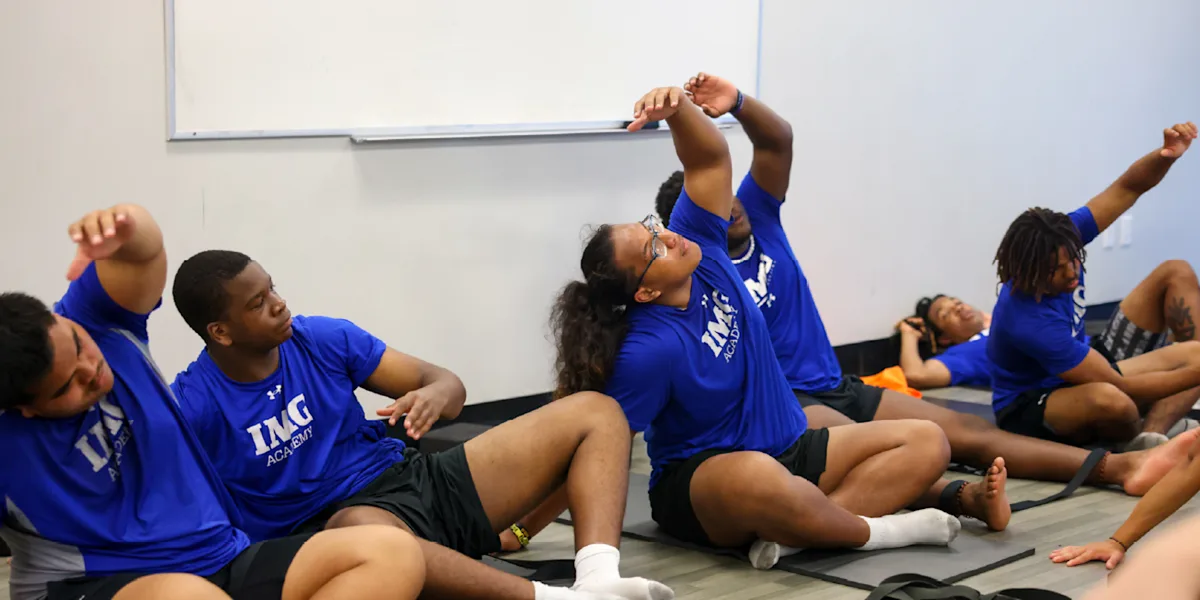
The best stretching routines match the demands of your sport. Before a game or practice, focus on dynamic movements that raise your heart rate and get your body ready to move. After activity, static stretches can help you build flexibility and range of motion while your muscles are warm.
Timing is important. Long static holds right before a game can cut into your power, which is the last thing you want before you compete. Save that work for after training or a separate mobility session.
Flexibility doesn’t happen overnight, though. It comes from showing up and putting in the work consistently. "Stretching helps support the overall guidance of movement quality and efficiency," said Brian Walker, IMG Academy assistant head of strength and conditioning.
Here, we break down some of the best stretches and routines for before and after your training.
Key Takeaways
Use dynamic movement before activity and static stretching after training or during dedicated flexibility work.
Dynamic stretches prepare your body for the movements your sport demands.
Static stretches can improve flexibility and range of motion when you practice them consistently.
Focus on the major muscle groups you use most in your sport, like your hips, hamstrings, or shoulders.
Hold most static stretches long enough to feel a gentle pull without forcing the position.
Better flexibility comes from staying consistent over time and building recovery into your routine.
Dynamic vs. Static Stretching: When to Use Each
Dynamic and static stretching have different jobs:
Dynamic stretches use controlled movement through your available range of motion. An example might be a routine built around leg swings and walking lunges. They raise your heart rate and help prepare your body for the movements ahead.
Static stretches involve moving into a position and holding it. They work well after activity or during a separate flexibility session, when your muscles are warm and you have time to focus on range of motion.
Best Stretches for Flexibility and Mobility
A simple routine blends both types of stretching: dynamic movement to prep your body before training, and static holds to build lasting flexibility afterward.
Build your routine around the areas your sport uses most. Throwing and swinging sports lean on the shoulders and torso. Sprinting and jumping sports put more demand on the hips, hamstrings, and calves.
Use the chart below for a quick look at each group, then find dynamic and static stretches broken out in the sections ahead.
Body Group | Dynamic Stretches | Static Stretches |
Arms | Arm circles, cross-body arm swings, overhead reach-and-pull | Cross-body shoulder stretch, overhead triceps stretch, doorway chest stretch |
Torso | Cat-cow, standing trunk twists, torso rotations with reach | Standing side bend, seated spinal twist, child's pose |
Lower Body | Leg swings, walking lunges, walking high knees | Hamstring stretch, hip flexor lunge stretch, calf stretch |
Arm Stretches
Your shoulders and arms handle a lot of work in many sports. Below, we cover dynamic stretches to warm up your arms before play, and static stretches to help them recover afterwards.
Dynamic Arm Stretches
Use these before practice or competition to raise blood flow and loosen up your shoulders and arms.
Arm Circles: Extend your arms out to your sides and make small circles, gradually making them bigger. Keep your shoulders down and relaxed as you move.
Cross-Body Arm Swings: Swing both arms across your chest and back out to your sides in a controlled rhythm. Let your shoulder blades move with you instead of staying locked in place.
Overhead Reach-and-Pull: Reach both arms overhead, then pull them back and down like you're rowing. Keep the motion smooth instead of jerky.
Static Arm Stretches
Save these for after training or a separate mobility session, when your muscles are warm.
Cross-Body Shoulder Stretch: Bring one arm across your chest and use your other arm to gently support it. Keep your shoulder relaxed rather than pulling it up toward your ear.
Overhead Triceps Stretch: Raise one arm overhead, bend your elbow, and let your hand move toward your upper back. Ease off if your lower back starts to arch.
Doorway Chest Stretch: Place your forearm against a doorway and step forward until you feel a stretch across your chest. Keep your shoulder blade down instead of letting it round forward.
Torso and Mid-Body Stretches
Your torso helps transfer force when you throw, swing, or change direction. Dynamic and static torso stretches keep your core strong and reactions quick.
Dynamic Torso Stretches
These get your spine and core ready to rotate before activity.
Cat-Cow: Start on your hands and knees, then round your back and reverse into an arch, moving with your breath. Avoid rushing through the reps or forcing an exaggerated arch.
Standing Trunk Twists: Stand with your feet hip-width apart and rotate your upper body side to side, letting your arms swing naturally. Keep your hips facing forward instead of turning with your shoulders.
Torso Rotations with Reach: Rotate your torso to one side while reaching an arm across your body, then switch. Move at a controlled pace rather than snapping through the range.
Static Torso Stretches
Hold these after training to build rotational mobility.
Standing Side Bend: Raise one arm overhead and lean gently to the opposite side. Keep your hips steady instead of turning the movement into a twist.
Seated Spinal Twist: Sit upright and rotate your upper body with control instead of using your arms to yank yourself deeper into the twist. Rounded shoulders mean you've gone further than your body is ready for.
Child's Pose: Sit back on your heels and reach your arms forward on the ground, letting your lower back and lats lengthen. Breathe into the stretch.
Lower Body Stretches
Your hips, hamstrings, and calves play a role in nearly every sprint, jump, and change of direction. Dynamic stretches ensure your legs are ready for explosive movement, while static stretches help muscles recover after intense activity.
Dynamic Lower Body Stretches
Use these to prep your legs before sprinting, jumping, or cutting.
Leg Swings: Hold onto something stable and swing one leg forward and back, then side to side. Keep the motion controlled instead of letting momentum take over.
Walking Lunges: Step forward into a lunge, then drive up and repeat with the other leg as you move forward. Keep your front knee stacked over your ankle.
Walking High Knees: Walk forward while driving your knees up toward your chest one at a time. Stay tall through your torso instead of leaning back.
Static Lower Body Stretches
Hold these after practices and games to build hamstring, hip, and calf flexibility.
Hamstring Stretch: Hinge forward gradually from a seated or standing position until you feel a gentle pull behind your leg. Stop before you start rounding your lower back.
Hip Flexor Lunge Stretch: Step into a split stance and lower your back knee toward the ground, keeping your front knee stacked over your ankle. Shift your hips forward gently until you feel the stretch in the front of your hip.
Calf Stretch: Stand facing a wall, step one foot back, and press that heel into the ground while leaning your hips forward. Keep the back heel down instead of letting it lift.
Does Stretching Actually Prevent Injuries?
Research shows stretching can lower the risk of injury, said Walker. The type of stretch, and how it fits into your routine, makes the difference.
A 2024 review that pooled several studies found static stretching significantly lowered the risk of muscle injuries. It didn't show the same effect for tendon injuries, which points to static stretching working better for some injury types than others.
Dynamic stretching has its benefits, too. A 2023 review found that warm-ups built around dynamic stretching and dynamic movement were tied to lower injury rates across a range of sports. That lines up with how coaches already use it: as the go-to way to prep your body right before activity.
Together, the two types cover different jobs. Static stretching supports long-term flexibility gains, and dynamic stretching gets your body ready to move. Use them at the right time, and both play a role in staying healthy.
Stretching is part of a larger sport rest and recovery routine. Giving your body time to rest, rebuild, and recover in between strenuous exercise also helps lower the risk of injury. You can also use the exercises in the IMG Academy+ Essentials injury prevention collection.
How Long to Hold a Stretch and How Much Is Too Much
“For static stretching, a controlled hold of about 15 to 30 seconds is a solid starting point. You want to feel gentle tension in the muscle rather than sharp pain,” said Walker. “If you’re shaking, holding your breath, or forcing your body into position, you may need to back off.”
Long, intense static holds right before explosive activities may work against you. Before competition, stick to movement that gets you ready for the speed and actions your sport requires. Save your deeper flexibility work for after training or a separate session.
How IMG Academy Builds Mobility and Durability
At IMG Academy, mobility isn’t a five-minute add-on before practice. Our coaches build it into every training session and game day to maximize movement and flexibility. That includes the dynamic warm-ups that open every session and the recovery work afterwards.
Your movement habits connect to everything else in your preparation, including how you sleep and how you manage pressure. That’s why our sports performance coaching looks at your training as a whole instead of treating stretching as a box to check.
Conclusion: Stretch Smart, Move Better
Growth looks different for every athlete, and your stretching routine should meet you where you are. Flexibility is something you build week by week, starting with the areas your sport uses the most.
IMG Academy+ Essentials gives you on-demand lessons on mobility, strength, and recovery that you can work through at your own pace. IMG Academy+ Personal Coach pairs you with an IMG Academy expert who builds nutrition and mental performance plans designed around your sport and your goals.
Frequently Asked Questions
When should I stretch? Before, after, or both?
You can do both, but use different types for different moments. Dynamic movements before practice or competition prepare your body for activity, while static stretches fit best after training, once your muscles are warm, or during a separate mobility session.
What’s the difference between dynamic and static stretching, and when do I use each?
Dynamic stretching involves controlled movement, while static stretching means holding a position. Dynamic movements belong in your warm-up before activity, and static stretches suit after training or a dedicated flexibility session. The best routines use each method with a clear purpose rather than repeating the same approach every time.
Does stretching actually prevent injuries, or is that a myth?
Stretching can help lower your injury risk, but the effect depends on the type of stretch and the injury you're trying to avoid. Static stretching has been linked to fewer muscle injuries, and dynamic stretching in a warm-up has been linked to lower injury rates overall. Treat stretching as one part of your preparation, alongside a sport-specific warm-up and adequate recovery.
How long do I need to hold a stretch for it to do anything?
For many static stretches, 15 to 30 seconds is a useful starting point. The key is consistency and good technique. Hold a position where you feel gentle tension and breathe normally rather than pushing into pain. If you have a specific injury or medical concern, talk with a health professional about the right approach.
Can too much stretching actually work against an athlete?
It can if you use the wrong type of stretch at the wrong time or push past a comfortable range. Long, intense static stretching right before explosive activity may briefly affect power, and stretching aggressively can irritate tissues. Your goal should be useful movement, not maximum flexibility.
Which stretches matter most for my specific sport?
Start with the movements and body areas your sport uses most. Throwing and swinging sports often rely on the shoulders and torso, while running and jumping sports put more work on the hips, hamstrings, and calves. A coach can help connect your stretches and mobility work to your individual training needs.