Cone Drills and Agility Training to Improve Quickness
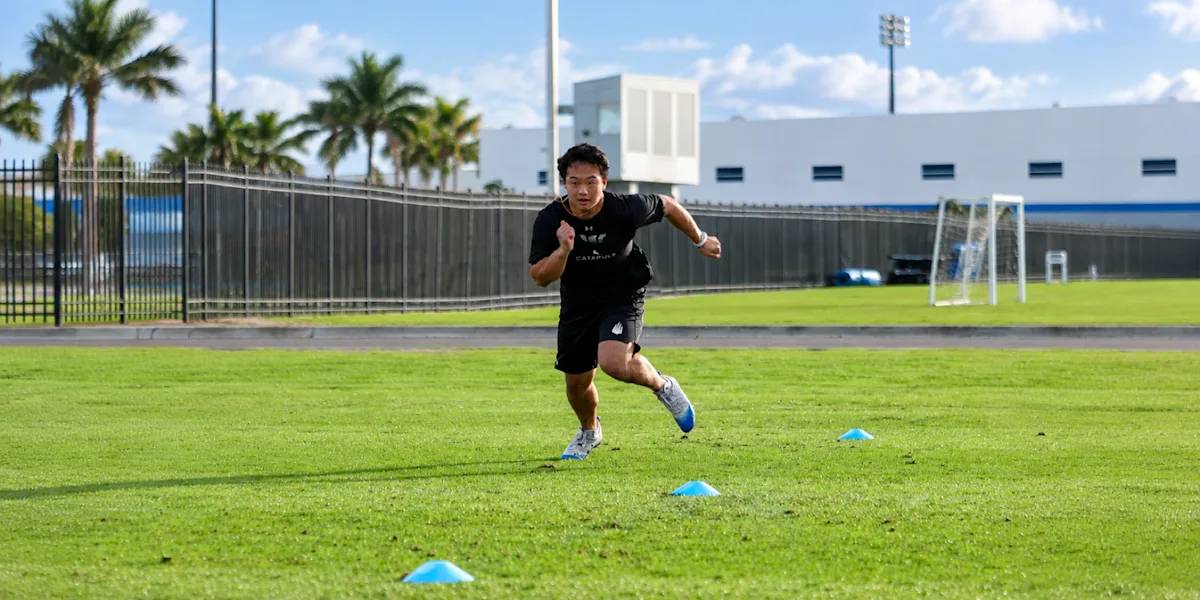
Cone drills give you a simple way to build quicker feet and sharper change of direction. All you need is a few cones and a flat surface. The movements you practice, including accelerating and pushing off, are the same ones you need during gameplay.
But here’s the catch: Running the same drill the same way every time only takes you so far. Game situations aren’t predictable. You often have to react on the spot to shifting defenders or a ball bouncing a way you didn’t expect. That’s why your training should account for reaction and decision-making, too.
Start with planned cone agility drills to nail down the footwork, then progress to exercises that force you to react on the spot. Keep your sessions focused, and make sure you’re recovering between hard workouts so the speed gains stick.
Key Takeaways
Cone drills build the acceleration, deceleration, and change-of-direction skills that show up in almost every sport.
Speed is about covering ground fast. Agility is about reacting and changing direction on the fly.
The 3-cone drill and the 5-10-5 shuttle challenge different movement skills, so training both gives you a more complete foundation.
Soccer and basketball players get the most out of cone drills when the movements mirror what they do in competition.
Ladder work can help sharpen foot coordination and body control.
Two focused agility sessions per week can be a reasonable starting point for many young athletes. Give yourself enough recovery time between sessions so you’re making progress and not just building up fatigue.
Agility vs. Speed: What’s the Difference?
Speed describes how quickly you can cover distance. Agility is what kicks in when you have to make quick adjustments to your movement on the fly.
A sprinter accelerates in a straight line. But a soccer player might need to slow down and redirect when an opponent changes direction. And a basketball player needs to react to stay in front of a ball handler who crosses over or changes pace. Those situations demand more than straight-line speed.
Track and field drills and cone drills can help you work on speed and agility. Start with planned movements, then progress toward drills with movements that match your sport.
Cone Drills That Build Quickness
These cone agility drills can help you build a foundation for quicker movement and better body control. Watch this IMG Academy video to see some of these movements in action before trying them yourself. If you don't have training cones at home, shoes or other safe household markers work just fine.
3-Cone Drill (L-Drill)
The 3-cone drill, also called the L-drill, challenges you to change direction several times without losing speed or control. To perform the drill:
Place three cones in an L-shaped pattern, with each cone five yards from the next.
Start beside the first cone in an athletic stance.
Sprint to the second cone, touch the line beside it, and return to touch the starting line.
Change direction again, sprint back toward the second cone, and run around its outside.
Continue toward the third cone, circle it, and weave back around the second cone.
Accelerate through the finish beside the first cone.
Stay balanced as you enter each turn, and avoid wide, uncontrolled steps that make it harder to accelerate out of the cone. If your footwork gets sloppy, slow things down and really focus on clean changes of direction.
5-10-5 Shuttle
The 5-10-5 shuttle, also called the pro agility shuttle, focuses on lateral movement and quick changes of direction. Here are the steps:
Place three cones in a line, with each cone about 5 yards apart.
Start at the center cone in an athletic stance.
Sprint 5 yards to one side and touch the cone.
Change direction and sprint 10 yards to the cone on the opposite side.
Touch the outside cone, then push off and sprint 5 yards back through the center.
Keep your steps controlled when planting and avoid reaching too far with your foot before changing direction. If you start losing balance during the turns, dial back your speed until you regain control.
If you’re using this cone drill for soccer training, the plant-and-redirect movement is similar to closing down an opponent or reacting to a sudden change in play.
Box Drill
The box drill uses four cones arranged in a square. You can use the setup to practice different movement patterns and build better awareness of your body position. To perform the drill:
Place four cones in a square.
Start at either bottom corner in an athletic stance.
Sprint forward toward the next cone.
Shuffle sideways across the next side of the square.
Backpedal along the third side.
Side-shuffle back to the starting cone.
Cross-over step and sprint back to the third cone to finish.
If your feet cross, your posture rises, or you lose balance, slow it down a little before pushing it to full speed.
If you’re practicing this cone drill for basketball, use defensive slides around the square to make the movements more like what you’d do in a game.
T-Drill
The T-drill combines forward acceleration with lateral movement, making it a good fit for basketball, football, and soccer players. Here’s what you do:
Arrange three cones in a horizontal line.
Place a fourth cone below the center cone to form a T shape.
Start at the bottom cone and sprint forward to the center.
Shuffle to one outside cone, then move across to the cone on the opposite side.
Return to the center cone and backpedal to the starting point.
Stay low while shuffling, and avoid bending too far forward or crossing your feet.
To make the T-drill more game-like, have a partner point or call out a direction as you reach the center cone. Reacting to the signal instead of running a memorized pattern is what turns this into a true agility drill.
For soccer dribbling, add a ball. Focus on keeping it close as you change direction rather than pushing it too far ahead.
Ladder Drill
An agility ladder is a flat training ladder placed on the ground to guide foot-placement drills. It complements cone drills for agility by helping you practice coordination and controlled foot speed. Try one pattern at a time:
In-and-outs: Step both feet into each square, then outside it.
Lateral shuffles: Face sideways and place both feet in each square as you move along the ladder.
Ickey shuffles: Use an alternating in-in-out pattern, exiting on opposite sides as you advance.
Once you feel comfortable with the footwork, add acceleration or a reaction cue to make the movement more relevant to your sport.
Star Drill
The star drill places several cones around a central point. You move from the middle to each marker and return before heading toward the next one. To perform the drill:
Arrange five or six cones around a center point.
Begin at the center cone.
Sprint toward one outside cone.
Slow down under control and return to the center.
Continue toward the remaining cones until you complete the pattern.
The repeated acceleration and braking in this drill mirrors what happens in many sports, where you’re constantly starting, stopping, and changing direction. To make it more game-like, have a partner call out or point to the next cone instead of going in order.
How Often to Train Agility for Real Change
For many middle and high school athletes, two agility sessions per week is a solid starting point. Sessions can be short, around 10 to 15 minutes of focused work, particularly if you already have regular team practices.“ Focus on edge work," said IMG Academy director of strength and conditioning Will Townsley. "That means concentrating on where you place your foot during ground interactions to change direction.”
Space out movement sessions enough to allow for rest and recovery. If your feet feel heavy or your technique starts to break down, more repetitions probably aren’t going to help.
Parents and student-athletes should also keep the total weekly workload in mind. Practices, games, and strength training all affect how much additional agility work makes sense for you.
How IMG Academy Sharpens Game-Ready Quickness
At IMG Academy, quickness training goes beyond memorizing cone patterns. Student-athletes learn to control their bodies and move explosively while developing the ability to read and respond to what’s happening around them. "After working on change of direction and developing positions in controlled environments, we work to incorporate more reactive components to training to work on more game-like situations and environments," said Townsley.
Those who attend boarding school and camp at IMG Academy also have access to personal development through strength and conditioning coaches, with a focus on holistic performance and education.
Our sports performance coaching teaches proper body position and footwork through planned movements first. As those skills improve, we layer in reaction cues and sport-specific scenarios so the training matches what happens in competition.
Conclusion: Train Quickness That Shows Up in Games
Cone drills give you the movement foundation. Reaction cues make that foundation useful in a game.
To get the most out of your agility training:
Use cone drills to learn and practice efficient movement patterns.
Make the drills less predictable. A coach can offer visual or vocal signals to react to in the moment.
Give your body time to recover between demanding sessions and build your training gradually.
Quickness takes time to develop, and the right approach depends on where you are as an athlete. If you're still building your foundation, IMG Academy+ Essentials gives you practical, on-demand guidance to help you train the skills that support better movement on your time.
If you're ready for more personalized support, IMG Academy+ Personal Coach pairs you with a coach who can tailor your nutrition and mental performance development to your sport and goals.
Frequently Asked Questions
Do cone drills actually make me quicker in a game or just at the drill?
They can, but only if you train beyond the pattern itself. Cone drills help you practice accelerating, decelerating, and changing direction with control. To carry that over to games, add a cue that changes where you move next, so you have to react before moving. That way, you’re not just memorizing a set sequence.
What's the difference between agility and pure speed?
Speed is largely about how quickly you can travel from one point to another. Agility involves adjusting your movement when the situation changes. Competition often requires you to slow down, turn, or move laterally because of another player’s position. That’s why cone agility drills should eventually progress beyond planned patterns to include reaction-based movement.
How do I set up effective cone drills at home with no equipment?
Shoes or other safe, visible objects can work as markers. Give yourself enough open space to move safely. Start with basic shuttle or box patterns, then add a cue that changes your direction once you're comfortable with the movement.
How often should I do agility work to see improvement?
Two focused sessions per week can be a solid starting point for many young student-athletes. But the right number really depends on your existing workload. If you already have several practices and games each week, you may need to limit additional agility training. Short, focused sessions with good movement quality are more useful than long sessions while you’re fatigued.
How do I make cone agility drills carry over to live play?
Once you know the movement pattern, introduce something unpredictable. A coach can point or throw a ball in different directions. Or a teammate can move first and force you to react. The goal is to read what’s happening and respond instead of just running the next step from memory.
What’s the most common mistake that makes cone drills less useful?
One common mistake is rushing through the pattern to get a faster time, which can make your body position and turns sloppy.
Another is never progressing beyond a predictable sequence. Once you've learned the movement, adding reaction and decision-making can keep cone drills challenging and more relevant to your sport.