How to Increase Your Vertical Jump
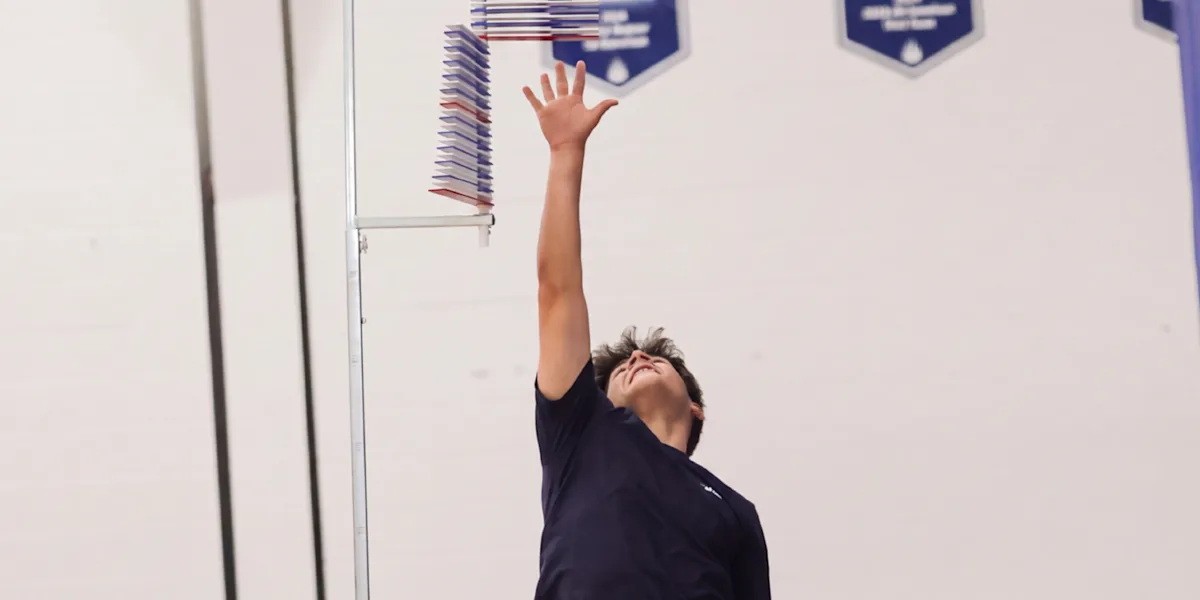
If you want to know how to jump higher, start by building the physical qualities behind a powerful jump: lower-body strength, explosive power, and efficient technique.
A bigger vertical comes from both strength training and plyometric training. Combining the two tends to produce the strongest results, allowing you to produce more force and apply it quickly.
In this guide, we’ll break down what goes into improving your vertical jump and the exercises our coaches use to help student-athletes reach new heights.
Key takeaways
A bigger vertical comes from combining strength work (e.g. squats) with plyometrics (e.g. drop jumps), not from either one alone.
Two to three focused training sessions a week, marrying strength and plyometrics, is enough for most student-athletes to see progress.
Prioritizing recovery days lets your legs adapt and get stronger between sessions.
A stalled vertical progression usually points to one of two things: overtraining and lack of recovery.
What Actually Makes You Jump Higher?
A recent review of 34 studies found that combining strength and plyometric training raises jump height more than either type of training does on its own. Timing appears to matter as well, with the biggest gains coming from athletes who paired heavy lifting and jumping in the same workout. "A well thought out progressive training program that prioritizes the strength and plyometric work is key to helping student-athletes increase their vertical," said Brian Walker, IMG Academy assistant head of strength and conditioning.
So, that means increasing your vertical jump depends on two things: how much force you can produce and how quickly you can produce it.
Strength provides the physical base. Stronger legs and hips can help you push more forcefully into the ground during takeoff. But strength alone does not automatically create a high vertical. You also need to apply that force quickly.
Explosive power is your ability to turn strength into fast, powerful movement. It relies partly on the stretch-shortening cycle, which occurs when muscles and tendons rapidly stretch before contracting. This is the type of movement you do during plyometric exercises.
Think about it this way: A thick rubber band slowly pulled back and released won’t launch something very far. That's strength without plyometrics: the raw power is there, but the body hasn't learned to release it quickly. A thin rubber band snapped fast won't launch anything very far either. That's plyometrics without strength: good speed, but not much force behind it. A higher vertical comes from having both a thicker band and the fast stretch-and-release to fire it off.
Strength Work That Builds a Bigger Vertical
Strength training lays the foundation for increasing your vertical jump. For middle and high school student-athletes, the focus should be the technique, so doing the exercises right becomes second nature. Only then should you start adding or increasing weight.
Squats
A squat trains the muscles you use to push into the ground during takeoff. Here are a few pointers on squatting technique, which you can use with or without weights:
Stand with your feet about shoulder-width apart, pointing forward or slightly outward.
Keep your weight balanced through your whole foot and bend your knees slightly.
Your chest should stay tall, and your arms can be stretched out in front of you (parallel to the floor), if you’re not using weights.
If you’re using weights, you can try:
Back squats: Rest a barbell on your back, just below your neck, and hold in place as you squat.
Front squats: Rest a barbell across the front of your shoulders and hold it in place with your elbows high. You can also do front squats by holding free weights at chest or shoulder level.
As you lower yourself, keep your knees tracking in line with your feet. Stop once your thighs become parallel with the floor.
Once you reach the bottom of the movement, push through the floor to return to standing.
Focus on controlling the movement rather than putting maximum weight on the bar. Adding load before you can maintain good positioning can make the exercise less effective and increase unnecessary risk.
Hip Hinges
Hinge movements target your posterior chain (the hips, hamstrings, glutes, and lower back), which does most of the work in a vertical leap. To do hip hinges:
Stand with your feet hip-width apart.
Push your hips backward while maintaining a straight back position and a slight bend in your knees.
Drive your hips forward to return to standing.
Once you have the technique down, you can add weights and turn this into a deadlift. You simply hold a barbell or free weights as you complete the exercise.
The movement should come primarily from your posterior chain rather than turning into another squat. You should feel your hamstrings and glutes working during this exercise.
Posterior-Chain Work
Posterior-chain exercises such as bridges can help strengthen the muscles along the back of your body that contribute to a higher, more powerful jump.
To do bridges:
Lie on a mat with your knees bent and your feet flat on the ground.
Your heels should be a few inches from your behind.
Tighten your core, squeeze your glutes and lift your hips until your body forms a straight line from your knees to your shoulders.
Lower with control.
This is another exercise where you can add weights and resistance once you perfect the technique. You can place a dumbbell on your hips or a resistance band around your thighs to up the impact of this strength exercise.
Plyometric Training for a Higher Jump
Plyometrics train your body to produce force quickly. They should build on a strength foundation rather than replace one.
Countermovement Jumps
The countermovement jump is one of the most useful drills for practicing a powerful vertical. Here are some tips on getting the movement right:
Start standing tall with your feet shoulder-width apart and your eyes forward.
Drop fast into a quarter-squat, then reverse direction immediately and drive up through your whole foot. The faster you switch from lowering to driving up, the more power you'll produce.
Let your arms swing back on the way down and punch forward and up as you jump.
Land softly with your knees slightly bent and let your hips and knees absorb the impact.
Reset fully before your next rep.
Do not turn every set into a competition to jump higher. Once your landing quality or movement mechanics begin to break down, stop the set.
Drop Jumps
Drop jumps can help train reactive strength, but they should be introduced carefully. Here’s the basics:
Stand on a low surface, like a stair or a short box, no more than a few inches off the ground to start.
Step off (don't jump off) and land on both feet at the same time, with your knees slightly bent to absorb the impact.
The instant your feet touch down, drive back up into a jump. The ground contact should be quick, almost like the floor is hot.
Starting from a height that is too challenging can change the purpose of the exercise. If you cannot maintain control, reduce the difficulty.
Jump Training Programming: Frequency, Recovery, & Breaking Plateaus
You do not need to train your vertical every day. "For many student-athletes, two strength and plyometric focused sessions per week can provide a reasonable starting structure when balanced with competition and other training," said Walker.
One example is a strength-focused session early in the week followed by a plyometric session after sufficient recovery:
Day | Training Focus | Approximate Time |
Monday | Strength training and plyometrics | 45–60 minutes |
Tuesday | Sport practice and sprints | Varies |
Wednesday | Rest or recovery work | 20–30 minutes |
Thursday | Plyometrics and strength training | 30–45 minutes |
Friday | Sport practice or light activity | Varies |
Saturday | Rest or low-intensity movement | 20–30 minutes |
Sunday | Rest | Full rest day |
What to Do When Your Vertical Stalls
A plateau can happen when your body has adapted to your current program. Too much fatigue, lack of variety in your drills, or a decline in technique can also limit progress. "Listen to your body and prioritize recovery," said Walker ...
Before adding more volume, evaluate your training:
Are you recovering between demanding sessions?
Has your jumping technique changed?
Have you built enough strength for the plyometrics you are performing?
Are you measuring your jump under similar conditions?
Resist the impulse to over-exert yourself. Recovery is part of progress, and giving your body time to recover is one of the most effective ways to sustain a demanding training routine.
Putting These Exercises to Work in Your Sport
Squats, hip hinges, countermovement jumps, and drop jumps build the same qualities every jumping sport needs. How you put those qualities to use changes based on what kind of jump you’re trying to improve.
Basketball
Rebounds, blocks, and closeouts rarely give you a running start. You explode off two feet from a stop or a shuffle, then land and go again almost right away. Countermovement jumps train that exact pattern: the fast drop-and-drive you use right before you leave the ground for a contested board.
Drop jumps build something basketball asks for just as often. Fight for an offensive rebound, miss the first attempt, and you need to jump again before your feet fully reset. That’s reactive strength, and it’s why drop jumps carry over so directly to the game.
None of it works without the strength underneath. Squats and hip hinges give your legs the capacity to absorb one landing and load up for the next.
Volleyball
A volleyball approach jump turns speed into height. Your last few steps build momentum, and your legs have a fraction of a second to redirect that momentum upward. Countermovement jumps mimic that same quick switch from downward motion into an explosive drive off the ground.
Blocking works differently. You often jump from a near stop at the net with little or no approach, so the two-foot power you build through squats and countermovement jumps matters just as much for blocking as speed matters for spiking.
Hip hinges deserve extra attention here too. Your posterior chain powers the arm-swing extension behind a hard-driven spike, so building strength in your hips and hamstrings pays off well beyond the jump itself.
Track and Field
Long jump and high jump both come off a single-leg takeoff, which is different from the two-foot jumps you’d train for basketball or volleyball.
In the long jump, converting your sprint speed into distance depends on how forcefully your takeoff leg drives into the ground on that final step. Drop jumps train that same quick, reactive push, so you carry speed into distance instead of losing momentum on takeoff.
In the high jump, the emphasis shifts more toward your hips. Your takeoff leg plants at an angle instead of straight down, so hip hinges and posterior-chain work like bridges build the strength you need to turn horizontal speed into vertical lift.
How IMG Academy Takes Your Jump to New Heights
Improving your vertical isn't just about doing more jumps. It takes the right mix of strength, technique, and recovery, built into a plan that fits where you are right now. That's where having the right sports performance coaching can make all the difference.
At IMG Academy, our coaches build training around the same strength and plyometric foundations covered in this guide, but tailored to your body, your sport, and your current level.
IMG Academy camps and boarding school offer access in-person to strength and conditioning coaches who can help improve your vertical jump. If you'd rather work at your own pace, IMG Academy+ Essentials gives you on-demand access to the same training approach so you can build strength and explosiveness on your own schedule.
Either way, you get a plan built by people who train jumping ability in high-performing student-athletes every day.
Conclusion: Bigger Jumps for Bigger Wins
Learning how to jump higher requires:
Building a stronger lower body.
Developing explosive movement through appropriate plyometrics.
Giving your body time to recover.
Progress may come gradually, but a structured plan can help you jump higher while building athletic skills that last.
If you’re looking for more support in improving your vertical, explore IMG Academy+ Essentials for on-demand training and development resources. Or, for more hands-on guidance from anywhere in the world, IMG Academy+ Personal Coach will give you access to world-class sports nutrition and mental performance coaches to help you compete at your best.
Frequently Asked Questions
How much can I realistically add to my vertical and how fast?
The answer depends on your starting point, training experience, technique, and consistency. Student-athletes may see progress relatively quickly as they improve movement skills and build strength. More experienced athletes may need longer to gain additional inches. Instead of chasing a specific number on a short deadline, track your progress over several weeks and months. A sustainable plan is more useful than trying to force rapid results through excessive jumping.
Which exercises actually add inches versus which just look impressive?
The exercises that matter most are the ones that address your current needs and that you can perform with good technique, not necessarily the most difficult-looking drills. Basic strength movements and appropriately progressed plyometric drills can all help you improve vertical jump performance.
Do I need weights or can I improve my vertical with bodyweight work?
You can improve with bodyweight exercises and jump training, particularly if you are new to structured training.
As your training progresses, appropriately supervised resistance training may help you continue building the strength needed to jump higher. The focus should remain on movement quality and a program that fits your experience and abilities.
Why has my vertical stalled and how do I break through it?
A stalled vertical can have many different causes. You may have adapted to your current program or simply accumulated too much fatigue. Review your technique and recovery first, then evaluate your training plan. You may need more strength work, a better plyometric progression, or more recovery between demanding sessions.
How often should I train my vertical without overtraining my legs?
For most student-athletes, two focused jump-training sessions per week is a solid starting point. That gives you time to work on strength one day and plyometrics or sprint work another, with enough recovery in between to actually adapt and get stronger.
More isn't always better. Your legs need recovery time to rebuild after hard training and skipping that step can lead to plateau instead of progress. If your legs feel heavy, your jumps start to break down, or you're sore for days after a session, that's a sign to scale back and let your body catch up.
Is jumping higher about strength, technique, or explosiveness?
It's really all three working together. Strength gives you the power to push into the ground during takeoff. Technique makes sure that power gets used efficiently instead of being compromised by poor mechanics. Explosiveness is what lets you apply that strength quickly.
Focusing on just one of these can leave you stuck. A strong athlete with poor technique might not jump as high as expected, and an athlete with great technique but little strength will hit a ceiling fast. A well-rounded program builds all three together instead of picking just one.