Strength and Conditioning for Student-Athletes
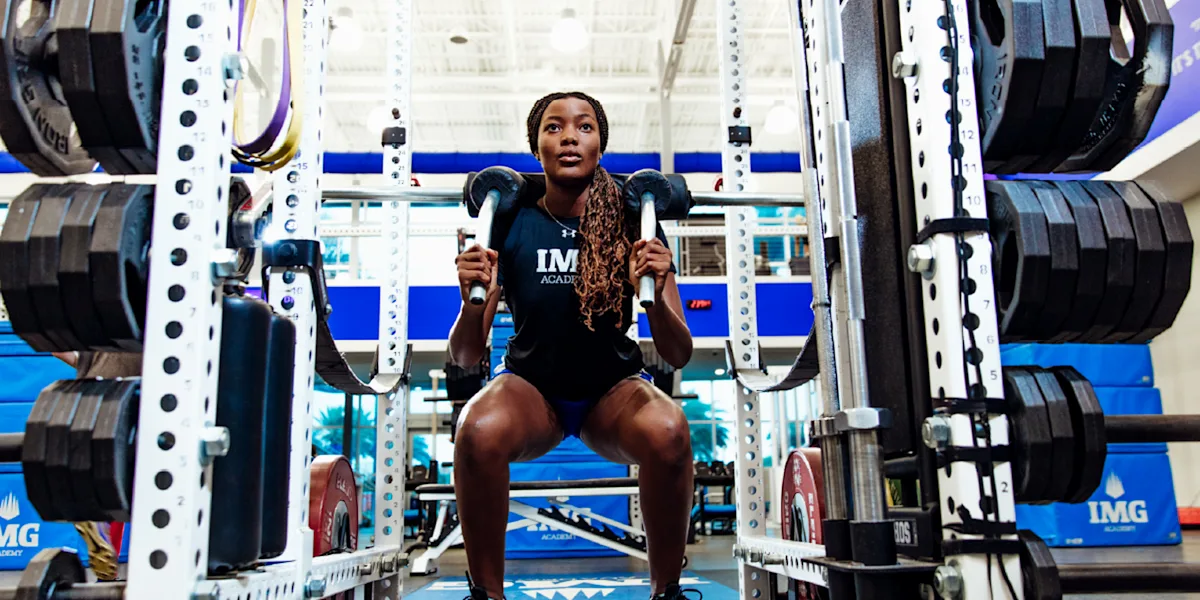
An effective strength and conditioning program for a student-athlete is tailored to their sport and goals.
For high school student-athletes, training should build qualities that transfer to competition without leaving you exhausted for practice and games. A well-designed plan accounts for your experience and schedule. “A good strength and conditioning program for high school student-athletes also builds on the foundation needed to help support them in the sport,” said Brian Walker, IMG Academy assistant head of strength and conditioning. “Foundation is so important for student-athletes because we’re looking at long-term development and trying to prepare them for the future.”
For parents, that means looking past how much weight an athlete lifts and asking whether the program is age-appropriate and guided by a qualified strength and conditioning coach like those at IMG Academy who understands long-term development.
Key Takeaways
A strength and conditioning program is built on structure and progression instead of random workouts.
Strength work builds the foundation for power, speed, and overall durability.
Plyometrics and sprinting convert that strength into explosive performance.
Movement efficiency, strength and conditioning should match your sport's specific demands.
Sleep and nutrition determine how much of your training can be beneficial to your goals.
A qualified strength coach keeps training safe, structured, and age appropriate.
What a Real Strength and Conditioning Program Looks Like
A strong strength and conditioning program brings different types of training together to develop the qualities your sport requires while managing fatigue across the week. The athletes who progress fastest show up consistently and track their progress. “They’re consistent,” said Walker. "they’re consistent on how they show up, effort, intent and attitude.” More than that, what successful athletes have in common is they treat recovery as part of the job, not an afterthought.
A sample week might include:
A dynamic warm-up before every on-field session.
Strength work three to four times a week, covering squats, hinges, push, pull, core and bracing.
Sport-specific conditioning two to three days a week.
Plyometric progressions programmed specific to athlete needs.
Mobility work done daily and layered in throughout sessions.
Prep work based on individual needs done before every training session (weight-room based).
Don’t Skip the Warm-Up
A dynamic warm-up raises your body temperature and moves the joints you'll use during training. Start with these warm-up drills, then let your speed and range of motion build as you go:
Leg swings: Swing one leg forward and back, then side to side, to loosen your hips and hamstrings.
Walking lunges: Step forward into a lunge and drive through your front leg to wake up your quads, glutes, and hip flexors.
High knees: Jog in place or move forward while driving your knees up toward your chest to raise your heart rate and prime your hip flexors.
Skips: Add a small hop to each step to get your calves and ankles ready for quick, explosive movement.
Arm circles: Rotate your arms in small, then larger circles to loosen your shoulders.
Begin each drill at an easy pace. Push the range of motion and speed a little further with each rep until you're moving the way you will once the workout starts.
This is also where a consistent pre-training routine takes shape. The same way athletes use sport rituals to settle their nerves before competition, a repeatable warm-up sequence signals to your body that it's time to work: same order, same cues, every session.
Jumping straight into heavy lifting or sprinting without warming up leaves your body ill-equipped for training and more prone to injury.
Strength Exercises for Powerful Moves
Strength-training exercises build the physical base behind athletic movement. Lower reps with heavier weight build max strength, while higher reps with lighter weight build endurance and capacity and help student-athletes safely develop technique early in a training cycle. A strength coach can tell you which end of that range fits your goals.
Your exact program will vary, but the following movement patterns are common starting points.
Squats
Squats train the lower body to produce force for movements like jumping and sprinting.
To perform a squat:
Start in a balanced athletic stance, feet about shoulder-width apart. Keep your weight balanced through your whole foot, and your chest tall.
Lower under control, knees tracking in line with your feet.
Push through the floor to return to standing.
If your knees cave inward, your heels lift off the ground, or your lower back rounds at the bottom, the weight is probably too heavy, or you're going deeper than your mobility allows right now. Start with a weight you can control and gradually increase over time. You can use your bodyweight first or a light bar. Once that feels solid, add a small amount of weight, and only add more once you can complete every rep with the same clean form you started with. Your knees should track over your toes, your chest should stay up, and you should be able to hit full depth without your form breaking down.
Hip Hinge
The hip hinge trains muscles like your hamstrings and glutes, which contribute to sprinting and jumping.
To perform a hip hinge:
Start with a slight knee bend and a stable, controlled spine.
Arms can be on your hips, or if you’re holding weights, slightly in front of you.
Push your hips backward while keeping your weight balanced and knees soft.
As you return to standing, make sure the movement comes from your hips, not your knees.
Drive your hips forward to return to standing.
A rounding lower back or shoulders that curl forward usually mean the weight is too heavy for your current position. If your knees bend more than they should, the hinge starts to turn into a squat, so keep the motion in your hips.
Push-Ups
Push-ups, which is a variation of a push, build upper-body and core strength, targeting the chest, shoulders, triceps, and abs with every rep. This exercise can strengthen movements like blocking, tackling, and throwing.
To perform a push-up:
Start in a high plank with your hands slightly wider than shoulder-width apart.
Keep your body in a straight line from your head to your heels. Bend your elbows to lower your chest toward the floor with control.
Elbows can go out to the side if you want to strengthen your chest muscles or graze the sides of your body if you want to target your triceps.
Push through your hands to return to the starting position.
Keep your core engaged and avoid letting your hips sag or rise too high. Elbows that flare straight out to the sides put extra strain on your shoulders, so keep them at a moderate angle from your body instead. Hips that drop toward the floor or pike up toward the ceiling are both signs your core isn't holding the plank the way it should.
If the movement is too difficult, start with your knees on the ground until you develop the strength for a standard push-up.
Plyometrics for Explosiveness and Speed
Plyometrics turn the strength you build in the weight room into reactive strength.
Countermovement Jump
Countermovement jumps build vertical power while teaching you to land with control.
To perform countermovement jumps:
Start by standing tall.
Quickly lower into an athletic position.
Reverse the movement and drive upward into the jump, letting your arms swing naturally.
Land softly and regain control before the next rep.
Watch your landing, not just your jump. If your knees cave inward or your landing is loud and stiff instead of quiet and controlled, slow down and reset before the next rep.
Bounding
Bounding is an exaggerated running drill with long, powerful strides and more airtime than normal running.
If you want to try bounding:
Build momentum with a light jog or a few controlled steps.
Push forcefully off one foot and drive the opposite knee forward and up.
Travel forward and land softly on the opposite foot.
Push off immediately and drive the other knee forward to begin the next bound.
Alternate legs, focusing on power and control rather than distance.
Keep your torso tall. Start with shorter, lower bounds before progressing to more powerful strides. If your landings feel harsh or your knee wobbles side to side, shorten the bound until your control catches up to the distance.
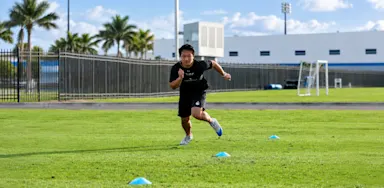
Short Accelerations
Short accelerations are brief sprints focused on building speed from a standing start rather than holding top speed over distance.
To try this exercise:
Start with one foot slightly in front of the other, body leaning forward.
Push forcefully into the ground and begin sprinting.
Take short, powerful steps as you build speed.
Rise into a more upright position as you accelerate.
Sprint briefly, then slow down and stop before fatigue breaks down your form.
Keep your steps short and quick out of the start rather than reaching with long strides, which can cause you to lose power and strain a hamstring. Stop the rep as soon as your form breaks down instead of pushing through fatigue.
Mobility Exercises for Fluid Movement
Mobility is your ability to control movement through a useful range. It’s not how far you can stretch, but how much of that range you can use under load. Limited mobility in your hips, ankles, or shoulders shortens the range you can move through with control.
When a joint can't reach the position, your sport calls for, like the deep hip turn in a pitching motion or the ankle bend in a lunge, your body has to compensate.
It either cuts the movement short or borrows range from somewhere else, like your lower back. Either way, you lose access to the strength you built right at the moment you need it most.
Common mobility exercises include:
Ankle rocks, where you drive your knee forward over your foot while your heel stays down, to build the ankle range squats and sprints depend on.
Hip rotations, moving slowly through controlled positions without forcing the end range.
Shoulder circles, done smooth and unhurried, to prep the joint for overhead or throwing work.
The same principle applies to each: control first, range second.
Conditioning for Endurance
Good conditioning matches the demands of your sport. A basketball player, a soccer player, and a distance runner all train their conditioning differently, because the demands of their sport are different.
Conditioning training may involve:
Short intervals with planned rest, like 30-second shuttle runs followed by a minute of rest, for sports built on repeated bursts.
Longer, steady efforts, like a continuous tempo run at a controlled pace, for endurance-based sports.
Change-of-direction drills, like cone shuffles or lateral bounds, for sports with constant stops and accelerations.
Even sports with short bursts of effort, like basketball or soccer, still rely on a base level of aerobic fitness. That base is what helps you recover between sprints, so your tenth rep looks like your first.
Match the work-to-rest pattern to what you face in competition. A sign you're overdoing conditioning volume is if it leaves you flat during your lifts or practices. When that happens, conditioning is working against you instead of for you.
Recovery to Maximize Results
Training creates challenges. Rest and recovery are when your body adapts to it.
Aim for 8 to 10 hours of sleep as a teenage athlete. Most physical adaptation happens during recovery, so skimping on sleep can diminish the results of your strength and conditioning program. You can learn more about the power of sleep here from IMG Academy+ Essentials Power of Sleep workshop.
Hydration matters just as much. Water helps carry nutrients to your muscles and flushes out the byproducts of hard training. So, try to hydrate throughout the day, not just during your session.
Finally, eating a protein-rich meal within a couple hours of training helps your muscles rebuild and come back stronger. Getting the timing right is one of the simplest ways to incorporate sports nutrition into your recovery plan.
Weight Training and Injury Prevention for Teens
For teenagers, strength training should be technique-first. Learn the movement, increase strength gradually, and add load once you can control the exercise through its full range of motion.
A qualified strength coach can teach you proper technique and adjust training to your experience. Copying an advanced workout from a professional athlete or adding weight because someone next to you is lifting more doesn’t build durable strength and increases risk of injury.
Tailoring the Program to Your Sport and Position
A strength and conditioning coach should build a training program around the specific demands of your sport. The table below breaks down what that can look like across a few common sports:
Sport | Training Emphasis | Examples |
Explosive jumping and repeated movement | Squats, jumps, short accelerations | |
Strength, power, and position-specific movement | Squats, presses, sled work | |
Repeated sprint ability, lower-body strength, and endurance | Single-leg work, sprints, conditioning | |
Rotational power and shoulder control | Pulling exercises, rotational work | |
Jumping and landing ability | Squats, plyometrics, landing drills | |
Change of direction and rotational movement | Lateral work, single-leg strength | |
Track and Field | Event-specific power or endurance | Strength and conditioning work matched to the event |
Lacrosse | Speed, repeated efforts, and physical strength | Sprints, strength work, conditioning |
Position also may play a role. A football lineman and a wide receiver both train strength, but their programs emphasize different physical qualities.
How IMG Academy Builds Strength That Transfers to Wins
At IMG Academy, strength and conditioning training is built around each athlete's sport rather than a one-size-fits-all plan. Athletes learn to move efficiently and build strength with proper technique before progressing to more demanding exercises. "We train to build a foundation for our athletes to put them in the best position possible to be successful at their sport and later on in life,” said Walker.
As they develop, a custom strength and conditioning program can incorporate explosive movements, sprint work, conditioning, and mobility based on what their sport and position require.
Strength and conditioning coaches also account for the rest of an athlete's schedule, so sessions support performance without adding unnecessary fatigue alongside practices and competition.
Conclusion: Train with a Plan, Not Just a Gym
A smart strength and conditioning program gives your training direction. It connects strength, explosive movement, conditioning, and recovery to what your sport demands.
You need a plan that fits your experience and goals. IMG Academy+ Essentials gives you on-demand access to our strength training curriculum, so you can build your skills at your own pace.
Frequently Asked Questions
How is a real strength program different from just working out at the gym?
A real strength and conditioning program has a clear purpose behind every session. Exercises, sets, intensity, and recovery are planned around your goals, not chosen at random. The program should evolve over time as your strength and experience grow.
How do I balance lifting with sport practice without getting run down?
Think bigger than just your lifting schedule. Don’t stack too many demanding sessions back-to-back during the busiest stretches of the season. Cut the volume before you cut the quality. Sleep and nutrition play a big role in how well you handle that workload, too.
How much should a program change based on my sport and position?
The underlying principles stay the same, but the details shift a lot. A volleyball athlete might spend extra time on landing mechanics, while a soccer player may place greater emphasis on repeated sprint ability. Position narrows it further. A strength coach can tell you which qualities deserve the most attention for your role.
How do I know if a program is age-appropriate for a teenager?
An age-appropriate program is technique-first. Learn the movement, build strength gradually, and only add load once you can control the exercise through its full range of motion.
A qualified strength coach adjusts the training to your experience and physical development rather than pushing you into advanced workouts too soon.
How do I train strength in season without losing my gains or getting tired?
In-season lifting shifts from building to maintaining, holding onto what you've built while practices and games place greater demands on your recovery. That usually means less volume at the same intensity, adjusted around your competition calendar.
How long before a strength program shows up in actual performance?
Timelines vary by athlete. Improved movement control and tolerance for training load usually show up before speed, power, or in-game performance visibly change. Track your progress and expect gradual improvement over the course of a season rather than after a single session.