Lacrosse Training Skills and Drills for Players

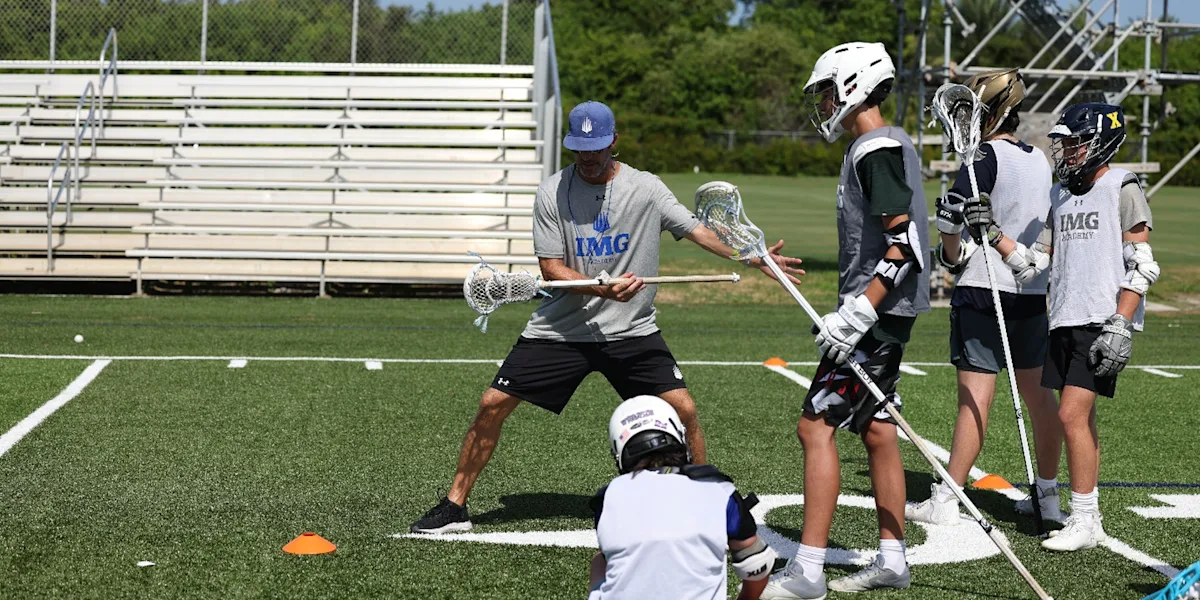
Effective lacrosse training starts with controlling the ball, moving your feet, and making good decisions. Practice catching, throwing, cradling, and scooping before adding speed or defensive pressure. As those skills become more reliable, connect them through drills that resemble the situations you face in a game.
As IMG Academy's head boys lacrosse coach, I help high school players develop their skills and game awareness. The fundamentals below apply broadly, while the face-off section focuses on the boys' field game. Adapt equipment, contact, and drill rules to your age group and competition with your coach's guidance.
Key Takeaways
Give your non-dominant hand regular practice in catching, throwing, and cradling.
Use wall ball and target work to build control before increasing speed.
Connect dodges and ground-ball pickups with the next pass or shot.
Develop defensive footwork and communication alongside stick skills.
Combine conditioning with recovery and use small-sided play to practice decisions.
Include passing, positioning, and controlled save practice in lacrosse goalie training.
Lacrosse Training Quick Reference
Choose a few training areas for each session so you can concentrate on quality rather than rushing through every skill.
Training Area | Starting Drill | Next Progression |
Stick skills | Wall passes and catches | Alternate hands and add movement |
Ground balls | Scoop a stationary ball | Scoop a rolling ball and pass |
Dodging | Change direction around a cone | Read a controlled defender |
Defense | Approach, stop, and retreat | React to a partner's movement |
Shooting | Controlled throws to a target | Add a step or dodge before release |
Goaltending | Ready stance and easy saves | Save, reset, and clear to a teammate |
Build Your Lacrosse Stick Skills
Wall ball gives you repeated practice delivering and receiving the ball. Choose a suitable wall or rebounder and an open area where rebounds will not hit other people or property. Start close enough to catch consistently, then move back or add pace as your control improves.
Hold the Stick With Control
Use your fingers to guide the shaft instead of squeezing it rigidly in your palms. Keep your wrists mobile as you cradle, pass, and receive. Your grip should control the stick while allowing the pocket to move with the ball.
Step Into Your Pass
Step toward the target with the foot opposite your throwing side. Let your hips and torso turn with the motion, and direct the butt end of the stick toward the target as you prepare to throw. Finish toward your partner or your chosen spot on the wall.
Practice With Your Non-Dominant Hand
Your non-dominant hand needs deliberate practice. For a right-handed player, practicing the left side means placing the left hand nearer the head of the stick; reverse that setup if you are left-handed. Start slowly enough that you can watch the ball into the pocket and make an accurate return pass.
Use these adjustments when learning:
Slide your top hand closer to the head of the stick for more control on the catch.
Present the pocket to the ball and watch it settle before preparing your throw.
Move your hand toward its usual position as the catch becomes comfortable.
Give both sides planned repetitions instead of always returning to your stronger side.
Using your non-dominant hand for simple tasks, such as brushing your teeth or using a spoon, can help you become more comfortable with it. Keep those tasks safe and manageable. They do not replace the specific catching, throwing, and cradling practice that develops your lacrosse skills.
Lacrosse Training Drills You Can Practice Regularly
Wall Ball With Both Hands
Choose a target and complete a short set of controlled throws and catches on each side. Reset after a poor repetition, then repeat the same task. As accuracy improves, add a hand switch between catches or a step toward the next pass. Track clean catches as well as accurate throws.
Ground Balls Into a Pass
Place a few balls in a clear practice area. Approach one, lower your hips by bending your knees, and keep the stick head low enough to scoop through the ball. Continue moving as you bring the stick into a protected position, look up, and pass to a partner or target. Work from both sides.
Keep your hands close to the ground without scraping them on the surface. Once stationary pickups are consistent, have a partner roll the ball gently into your path.
Cradling With a Change of Direction
Walk through a few cones while cradling, then switch hands in a controlled position and turn toward the next cone. Progress to an easy jog once you can keep possession without staring into the pocket. This connects stick control with the footwork you need to change direction.
Create Space With Controlled Dodges
A dodge should create room for your next pass or shot. Practice the movement slowly, protect the stick, and accelerate into the available space instead of adding extra moves without a purpose.
Split Dodge
Approach a cone with the ball on one side, change direction, and switch hands while keeping the stick protected near your body. Turn your shoulder as you move so the stick head is not exposed to an imaginary defender. Add a controlled one-on-one partner once you can keep the ball secure.
Roll Dodge
Plant under control, turn your back briefly toward the defender, and pivot into space while protecting the stick with your body. Keep a stable base and complete the turn before looking for the next pass. Begin around a cone; avoid placing your foot between a partner's legs as a practice cue.
Improve Defensive Footwork and Communication
Good defense begins with staying balanced and controlling the space between you and the ball carrier. Move your feet before reaching with your stick, and follow the contact rules for your game. A rushed approach can carry you past the attacker and make it harder to recover.
Approach and Recover With Cone Drills
Run toward a cone representing the attacker, shorten your steps to slow down, and settle into a balanced defensive stance. Retreat a few controlled steps, then open your hips and turn to run. The approach practices closing space; the stop helps you avoid overcommitting; the turn prepares you to recover if an attacker moves past your shoulder.
Add a partner's left-or-right signal when the planned movement is comfortable. IMG Academy's cone drills and agility training guide offers more options for practicing direction changes.
Mirror an Attacker
In a controlled, non-contact drill, have a partner change direction while you move to stay in front. Practicing without a stick can help you focus on your feet instead of reaching. Begin slowly, and keep enough space for both players to stop safely.
Communicate While Moving
Practice your team's calls for the ball, help, and defensive changes while maintaining your position. Clear, early information is more useful than shouting after the play has already passed you.
Develop Shooting Power and Accuracy
Use your legs, torso, and wrists together rather than trying to generate all the force with your arms. Begin at a distance where you can control the ball and hit a target with your normal motion. Check that the area behind and around the goal is clear.
For a controlled drop-step drill, begin partly turned away from the goal, step toward it, rotate your torso, and release toward the target. Practice at modest speed before adding a hop or a faster approach. Keep enough space for your stick to travel freely, and have a coach check the sequence if the movement feels awkward.
Practice Face-Offs and the Ground Ball Afterward
In boys' field lacrosse, the initial contest is only part of a successful face-off. You also need to locate, scoop, and move the ball once it is free. Learn the permitted stance and stick action from your coach for your current rules.
Practice the setup and first movement slowly, then add a partner and a whistle. Finish each repetition by collecting the loose ball and moving it to a teammate or target. A hand-speed drill alone does not practice the complete possession.
Strength and Conditioning for Lacrosse
Lacrosse conditioning should prepare you for repeated bursts of movement and recovery between them. Short accelerations, controlled stops, and changes of direction complement the broader endurance you need throughout a game. Build the workload around your position, training history, and team schedule.
In the weight room, develop lower-body and trunk strength through appropriately coached movements such as squats, lunges, and rows. Progress jumps or bounds only when you can land with control. IMG Academy's guide to strength and conditioning for student-athletes can help you understand how physical preparation fits your sport.
Build Decision-Making With Small-Sided Play
Lacrosse requires you to respond to the defense as well as execute a skill. A three-on-two drill gives three attackers an advantage while asking them to recognize the open player and move the ball. Defenders practice communicating and deciding which space to protect.
Once players understand the drill, add one constraint, such as requiring a non-dominant-hand pass. Keep the challenge appropriate to the group so it creates useful decisions without making every possession break down. Then remove the constraint and see whether players use the skill in freer play.
Lacrosse Goalie Training Basics
Goalies need stick skills for clears as well as the positioning and reactions needed to make saves. Include wall ball or partner passing, then practice delivering an outlet pass after a controlled save.
Ready stance and reset: Move into your ready position, respond to a coach's cue, and reset before the next repetition.
Controlled saves: Start with predictable, manageable deliveries and progress the placement and pace with a goalie coach.
Save and clear: After securing the ball, look up, find a teammate or target, and make an accurate pass.
Use appropriate goalkeeper protective equipment, including during drills with softer balls. Keep weighted reaction work and specialized equipment changes out of a beginner's routine unless a qualified coach has assessed their suitability.
Track What Improves
Choose a measure that matches your practice goal, such as clean non-dominant-hand catches, successful ground-ball pickups, or accurate outlet passes. Check whether the improvement also appears during team practice. IMG Academy's guide to effective goal setting for athletes can help you turn those observations into a useful next step.
Frequently Asked Questions
Which drills build skills that show up in games?
Start with wall ball, ground balls, controlled dodges, and defensive footwork. Then connect the skill with a decision or a next action, such as scooping and passing or dodging into a shot.
How do I improve stick skills by myself?
Use planned wall-ball and cradling sessions in a clear practice space. Walk or jog between cones, switch hands, and practice looking ahead. This does not mean carrying a stick while walking a dog, moving through crowded school hallways, or doing tasks that require your full attention.
How do I train for lacrosse conditioning?
Combine repeated short efforts with recovery and broader conditioning appropriate to your role. Include acceleration, stopping, and turning instead of relying only on straight-line running. Build up gradually alongside team practices.
What should a beginner learn first?
Start with catching, throwing, cradling, and scooping. Practice both sides from the beginning at a pace you can control, and add more complex drills when those movements become dependable.
How do I get comfortable with my non-dominant hand?
Give it regular, deliberate practice with a manageable target and pace. Move your top hand closer to the stick head for control when needed, then gradually return to your usual grip. Repeat the skill with movement once the stationary version is consistent.
How do I know whether training is working?
Compare the same tasks across several sessions and look for more consistent control, accuracy, and decisions. Ask your coach whether those changes are also showing up in scrimmages or games.
Put Your Lacrosse Skills Into Play
Lacrosse development depends on dependable stick skills, balanced movement, and decisions that connect one action to the next. Practice both hands, build from controlled drills to live situations, and track a few meaningful goals. IMG Academy+ Essentials offers on-demand skill-development and performance resources to support work between team sessions. For personalized help with focus, confidence, or fueling a demanding practice schedule, IMG Academy+ Personal Coach provides mental performance or nutrition coaching.