Time Management for Student-Athletes
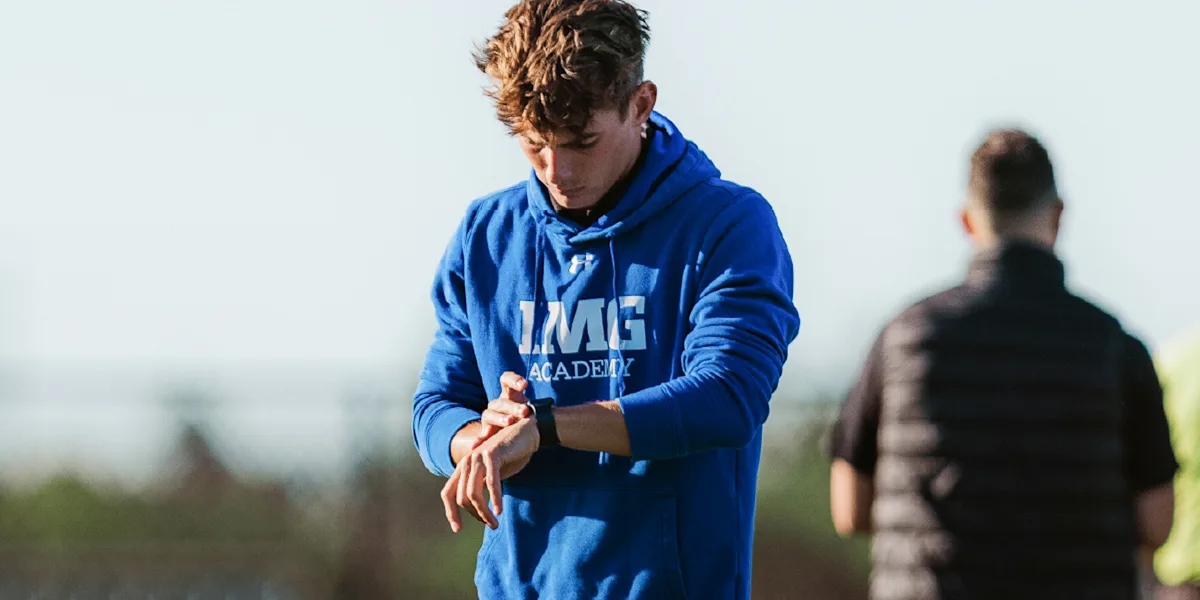
Student-athletes have a lot competing for their attention. School, practices, competitions, travel, and homework can quickly fill a week. It’s easy for grades or performance to slip without a system in place. Student-athlete time management comes down to protecting what matters before the week fills in around it.
The demands only grow at the college level. The NCAA’s 2025 Growth, Opportunities, Aspirations and Learning of Students in College (GOALS) study found that Division I student-athletes spend a median of 34 hours a week on their sport during the season, and 33.5 hours on academics, while averaging just 6.8 hours of sleep a night.
High school student-athletes might face a different schedule, but the same tension between school and sports often starts there.
A workable schedule can help you stay prepared without sacrificing the recovery you need to perform.
Key Takeaways
Effective time management for student-athletes starts with knowing where your time goes each week.
A realistic student-athlete schedule should account for school, sports, sleep, and downtime.
Short study blocks can make it easier to finish assignments when your energy is low after practice.
Protecting sleep supports concentration and academic performance.
During busy stretches, prioritize deadlines first and loop in teachers, coaches, and parents early.
Managing competing responsibilities now builds habits that carry over to college athletics.
Why Time Feels So Tight for Student-Athletes
A packed schedule can make it feel like there simply aren’t enough hours in the day. That feeling doesn't always come from poor planning. Student-athletes have genuine demands competing for the same blocks of time.
According to the NCAA, college student-athletes have about 85 hours a week for sleep, work, and extracurricular activities outside academics, sports, and socializing. That’s out of 168 hours total.
Sleep can become one of the first things pushed aside. Student-athletes in the NCAA GOALS study averaged 6.8 hours of sleep per night during the 2025 season. That’s below Centers for Disease Control and Prevention (CDC) recommendations of at least seven hours a night for adults or eight to 10 hours for 13- to 17-year-olds.
High school schedules might look a little different, but the pressure can start early. Learning time management for student-athletes helps you be intentional with your time before the weeks start to get away from you.
Build a Weekly Schedule That Works
There are things on a student-athlete’s schedule that you just can’t move, and that’s where to start.
Put school hours, team practices, and competitions on the calendar first. Then add commitments like private lessons, travel, and extracurricular activities you already know about. Once the fixed pieces are in place, add the responsibilities that need dedicated time, like homework and studying.
Next, look for smaller openings to start chipping away at schoolwork. A 30-minute gap before practice may be enough to review notes or start an assignment. In between games at a tournament? Use that time to read a chapter or two in the book you need to finish for English class.
Tackling large tasks in small steps makes completing them more manageable while reducing stress.
If you’re looking for a place to start, try this simple weekly process:
Map the week. Write down fixed commitments first.
Add academic deadlines. Check your school portals, syllabi, and upcoming tests.
Block study time. Schedule specific subjects instead of writing “homework” across a two-hour block. For example: “6:45–7:15 p.m.: Algebra problem set.”
Plan around energy. Put your hardest academic task in a period when you can concentrate.
Leave breathing room. A schedule packed from morning until bedtime falls apart the moment a practice runs late or a teacher adds an assignment. Pad your commitments with a five- to ten-minute grace period and make sure to build in ‘free time’ blocks.
Review tomorrow before bed. Five minutes of planning can make the next morning much easier.
Parents can help by asking a student-athlete to walk through the week rather than creating the entire schedule for them. That approach keeps ownership of the plan with the student-athlete while still offering support.
Beating Procrastination and Fatigue
After a long practice, starting a major assignment can feel nearly impossible. “The best way to beat procrastination is to stop waiting to feel motivated and simply start,” said IMG Academy mental performance coach Emily Wright.
To beat procrastination, Wright suggests, try these strategies:
Break it down: Make the task smaller and more manageable.
Start with 5 minutes: Commit to just the first step.
Remove distractions: Make it easier to focus.
Set a deadline: Give yourself a clear target.
Focus on action, not perfection: Progress is better than waiting for the “perfect” time.
Instead of committing to, say, “finish my history project” in one full go, decide to work on it for 20 or 25 minutes. Put your phone away and start a timer. When the block ends, take a short break before deciding whether to continue.
It can also help to tackle the toughest academic tasks earlier in the day when possible. If you have a major test tomorrow, studying for 30 focused minutes before practice might prove more productive than trying to force yourself through an hour late at night.
Social media can also sneakily consume the small pockets of time that make a student-athlete’s schedule work. Consider using app limits and a separate study space to create distance from distracting notifications. The less friction between you and your schoolwork, the easier it is to use those short study windows effectively. “The hardest part is often starting. Once you start, momentum takes over,” Wright added.
Want to schedule time with a personal coach? Start here.
Protecting Sleep and Recovery
A consistent sleep routine is one of the first things to account for when planning your week.
The CDC’s 8-to-10-hour sleep recommendation for 13- to 17-year-olds is a target many student-athletes fall well short of.
Research on adolescent athletes found how wide that shortfall can get: In a small study of 12 adolescent basketball players, total sleep averaged about 6 hours and 22 minutes, with sleep dropping significantly further on schooldays compared to both weekends and holidays.
That's why how you balance sports and school matters so much. Cutting sleep to create another hour for homework may leave you less prepared to learn and compete the next day.
So, build a consistent bedtime into your weekly plan. Give yourself enough time to finish schoolwork before that window and avoid treating late-night studying as your default solution.
Sleep also plays a direct role in focus, which is worth understanding on its own.
Handling Finals and In-Season Crunch
Some weeks are just harder than others. Finals, tournaments, travel, and major school projects have a way of colliding at once.
When that happens, prioritize. Start with the deadlines that can’t move and the tests that need the most prep. Then break any large assignment into smaller pieces you can schedule across several days, rather than facing it as one block.
If a competition or travel schedule conflicts with a major academic deadline, talk with your teacher before the deadline arrives. Coaches and parents can help you communicate when athletic commitments create legitimate scheduling conflicts.
A demanding week might mean cutting back on screen time or turning down plans with friends for a few days. That’s a fair trade if it protects sleep and schoolwork, the two things that will get you through the week.
Recovery still belongs on the schedule, even then. Managing sport rest and recovery works best when you account for planned downtime.
How IMG Academy Supports the Whole Student-Athlete
Time management is one part of a bigger picture. How prepared you feel for the next challenge also comes down to the academic habits and mental performance you build along the way.
IMG Academy approaches student-athlete development as a combination of performance, personal growth, and preparation for what comes next. Through IMG Academy+ Essentials, student-athletes can access on-demand content covering everything from mental performance to nutrition and life skills. IMG Academy+ Personal Coach offers a more individualized option, with one-on-one personalized online coaching and ongoing accountability from world-class coaches.
That kind of support builds skills that outlast a single season. Planning your own week and making decisions independently are exactly the kind of skills that carry that ownership forward.
Conclusion: A Plan You Can Actually Keep
Good student-athlete time management starts with a schedule you can follow. Map your fixed commitments first. Then protect time for school and give sleep and recovery a place on the calendar instead of whatever’s left over.
When the week gets too busy, prioritize the most important tasks and ask early for help when you need it.
These habits become more valuable as your responsibilities grow. Developing them now can help you handle the demands of high school athletics while building skills that carry into college and beyond.
Whether you want to create and follow your own plan with IMG Academy+ Essentials or get one-on-one help with IMG Academy+ Personal Coach, we’re here to help you stay on track, during the school week and beyond.
Frequently Asked Questions
How do I balance a full practice schedule with keeping my grades up?
Start with a weekly calendar that shows practices, competitions, and school commitments. Then add specific study blocks around those fixed activities. Use smaller pockets of time for reading or review and reserve your highest-energy periods for harder assignments. If your schedule repeatedly leaves you unable to complete schoolwork, talk with a parent, teacher, or coach before the problem grows.
What do I cut when there genuinely aren't enough hours in the day?
Removing optional activities and reducing low-value screen time is often a good place to start. Look for commitments that can be paused during a particularly demanding week. Avoid sacrificing schoolwork and recovery time. Time management for student-athletes works best when you make deliberate tradeoffs instead of trying to fit every responsibility into every day.
How do I stop procrastinating when I'm exhausted after practice?
Make the first task small. Set a 20- or 25-minute timer and choose one specific assignment or section to complete. If possible, move demanding schoolwork earlier in the day, before practice drains your energy. If exhaustion happens every night, it might be worth reviewing your sleep and training schedule rather than simply adding more late-night study time.
How do I make time for rest without falling behind?
Put rest on your calendar alongside school and athletics. A planned break can help you avoid filling every available hour with work. Sleep should remain a priority for adolescent student-athletes, who generally need 8–10 hours per night. If your workload consistently leaves no room for recovery, revisit your priorities with a parent, teacher, or coach.
What systems actually work for a teenager, not just adults?
Keep the system simple enough to use every day. A digital calendar, paper planner, or combination of both can work. The key is recording upcoming deadlines and specific study blocks in one place. A five-minute review each evening can also help you see what needs attention tomorrow before the day starts.
How do I handle the crunch of finals during the season?
Start planning before finals week. Write down every exam and major assignment, then divide preparation across the days available. Tell your coaches and teachers about major conflicts early. During the busiest days, prioritize deadlines and high-impact studying while reducing optional activities. Keep sleep and recovery in the schedule so you can stay focused through both competition and exams.