What Are Plyometrics and Do They Matter for Student-Athletes?
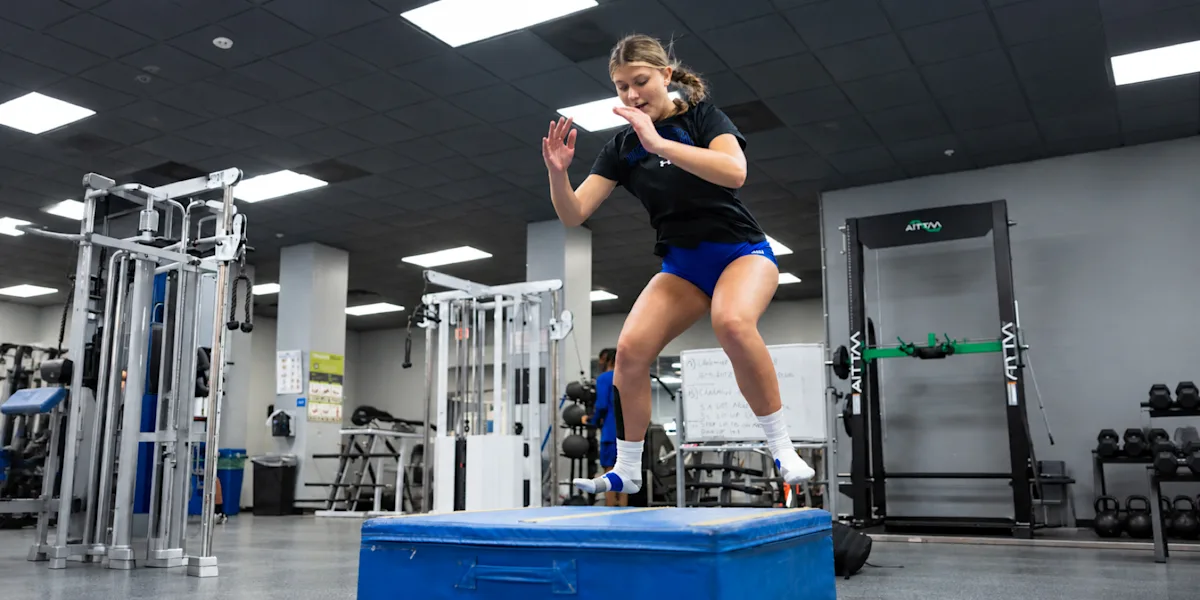
Plyometrics are a style of training built around fast, explosive movements. An easy way to picture it is by thinking of your muscles and tendons like a spring. You load up by absorbing force, then release it quickly to jump, push off, or change direction.
Box and squat jumps are common plyometric exercises. What makes them plyometric isn’t the movement itself but the speed behind it. You’re essentially training your body to use its strength faster.
Research on youth athletes supports plyometric training as a way to improve several measures of physical fitness and sport-specific performance. Jumping higher for a rebound or accelerating past a defender, for example, rely on the same kind of rapid force production that plyometric training develops. "Plyometrics are the bridge between what we do in the weight room and what you train for in your sport," said IMG Academy assistant head of strength and conditioning Brian Walker.
Key Takeaways
Plyometrics train your body to absorb force and redirect it quickly.
Some think plyometric training is just jumping. But the speed and quality of each movement is what makes it plyometric.
Plyometric training can help student-athletes improve jumping ability, acceleration, and change-of-direction skills.
A solid strength and movement foundation can help you handle more demanding explosive exercises.
Start with exercises you can perform with controlled takeoffs and quiet landings before moving to higher-impact drills.
Technique matters more than adding repetitions or jumping from a taller surface.
Two well-planned plyometric sessions per week is a reasonable starting point, depending on your overall training load.
Build recovery into your training schedule from the start. Your body needs time between plyometric sessions to adapt and get stronger.
What Are Plyometrics?
Plyometrics are training exercises that teach your body to convert stored energy into movement. Hops, jumps, and bounds can all fit into a plyometric training program, although casually performing those movements does not automatically make them plyometric exercises.
Picture yourself preparing to jump. You bend your hips, knees, and ankles to load up, then immediately push into the ground and explode upward. That quick transition from absorbing force to redirecting it is what makes the movement plyometric.
Compare that to a slow squat followed by a long pause and then a jump. Both movements build strength, but the slow version takes the spring out of it. Plyometric training is about keeping that spring loaded and firing quickly.
Plyometric training works best when you perform each rep with intent. You’re practicing how to produce force quickly while staying in control of your body position.
Benefits of Plyometrics Exercises for Athletes
Plyometric exercises help student-athletes build the kind of explosive power they need in games. That might mean getting off the ground to catch a pass or quickly changing direction to keep up with an opponent. Those moments rely on how fast your body can produce force.
Plyometric training can improve:
Jumping ability
Linear speed
Change-of-direction performance
Reactive strength
Best Plyometric Exercises and How Often to Do Them
A 2023 study found improvements in sprint speed, jumping ability, and reactive strength when student-athletes trained between one and three plyometric sessions per week. For many student-athletes, two quality sessions each week with 72 hours of recovery between them can be a solid place to start. “When the quality of the plyometrics starts to diminish, that’s when you realize you’re doing too much,” said Walker.
If you’re newer to plyometrics, start with manageable movements that give you a chance to build confidence and learn proper mechanics before progressing to more demanding drills.
Your sport schedule matters, too. Managing workload and following a rest and recovery routine are the kind of long-term habits that successful student-athletes have in common.
Here are a few plyometric exercises to consider adding to your workout routine:
Exercise | Difficulty Level | What It Develops |
Pogo Hops | Beginner | Fast, controlled push-offs and lower-leg coordination |
Box Jumps | Beginner to Intermediate | Lower-body power and landing control |
Bounds | Intermediate | Horizontal power and sprint mechanics |
Jump Rope | Beginner | Foot speed, rhythm, and lower-leg coordination |
Squat Jumps | Intermediate | Powerful takeoffs and landing mechanics |
Pogo Hops
Pogo hops use small, quick jumps to practice rapid push-offs from the ground.
Stand tall with your feet under your hips.
Keep your jumps low and use only a slight knee bend.
Push quickly off the ground and land softly before repeating.
The movement should feel springy rather than like a deep squat jump. Avoid bending deeply at the knees or trying to jump as high as possible. If your landings are loud, your heels are hitting first, or your posture is collapsing forward, slow it down and focus on staying light.
A beginner-friendly guideline is two to three sets of low to moderate repetitions, two or three times per week.
“The amount of repetitions should be dependent on the level of athlete,” said Walker.
Box Jumps
Box jumps are a common plyometrics exercise for developing lower-body power and landing control.
Stand in front of a box at a comfortable distance.
Lower into an athletic position and jump onto the box with both feet.
Land softly and under control before standing fully upright.
Start with a box height that lets you focus on a powerful jump and a controlled landing. A common mistake is picking a taller box and pulling your knees toward your chest to clear it.
Watch for heavy landings or knees collapsing inward. If you’re struggling to land quietly and under control, lower the box height until you can stick your landings cleanly.
A practical guideline is three to four sets of three to five repetitions, two to three times per week, with enough recovery between reps to keep each jump powerful.
Bounds
Bounding drills use powerful strides to train horizontal force and can support sprinting and jumping.
Push forcefully off one foot and drive forward into the next stride.
Land under control on the opposite foot.
Continue with powerful, rhythmic strides while maintaining your posture.
You can use alternating-leg or single-leg variations depending on your experience and training plan. Beginners should start with shorter distances and focus on balance after each landing.
Avoid overstriding, as it can mess up your rhythm and make it harder to land under control. And if you’re stumbling after landings or losing your posture, shorten the distance and focus on smoother contacts before adding speed.
Try two to three sets of 20 to 30 yards, one to two times per week.
Jump Rope
Jump rope can help build foot speed, rhythm, and coordination while practicing repeated ground contacts. It’s a good starting point for student-athletes who are still developing the mechanics needed for more demanding plyometric exercises.
Keep your jumps low and controlled.
Turn the rope smoothly while maintaining a steady rhythm.
Land softly on the balls of your feet.
Try to avoid heavy landings or allowing your knees to collapse inward. If you keep tripping or your technique starts breaking down, take a short break. Pushing through sloppy reps can reinforce bad patterns.
Try three to five sets of 30 to 60 seconds, up to three or four times per week depending on your overall training schedule.
Squat Jumps
Squat jumps combine basic strength mechanics with a powerful upward drive. They’re a good way to learn how to produce force through the ground and land under control before moving to more complex variations.
Lower into a controlled squat.
Drive forcefully through the ground and jump upward.
Land softly, regain your balance, and reset before the next rep.
Pay attention to your knee and hip position as you land. If your knees are caving inward or your landings are loud and unstable, dial back the intensity and focus on control.
A starting guideline is two to three sets of six to 10 repetitions, two to three times per week.
How IMG Academy Builds Explosive Power
At IMG Academy, sports performance coaching starts with the student-athlete in front of us. Age, movement skills, sport demands, and training history all shape how we build a program.
Our coaches focus first on the physical groundwork needed for faster, more powerful movement. That means sound mechanics and consistent body control before anything else.
As those skills improve, training can get more challenging. A student-athlete might progress toward movements that demand greater power and coordination while continuing to focus on technique. For student-athletes looking to develop that foundation in person, our strength and agility training camps are built around that same approach.
Conclusion: Use Plyometrics to Build Explosiveness the Smart Way
Plyometric training teaches your body to absorb force and channel that energy back out. But the student-athletes who get the most out of it are the ones who start with technique. Learn how to land well before you worry about jumping higher. Build coordination first, then add intensity gradually.
Growth looks different for every student-athlete, and the right support should match where you are right now. IMG Academy+ Essentials gives you the knowledge and tools to train at your own pace. If you're ready for more hands-on guidance, IMG Academy+ Personal Coach connects you with a world-class mental performance or nutrition coach who can build a plan around your sport and goals for the future.
Frequently Asked Questions
What actually makes plyometrics different from regular jumping?
It comes down to speed. Plyometric movements focus on absorbing force and redirecting it as fast as possible. A jump performed slowly with a long pause at the bottom doesn’t train that same quick, spring-like action. The rapid transition between loading and exploding is what makes an exercise plyometric.
Is plyometric training safe for a young athlete and at what age?
Plyometric training can be appropriate for young student-athletes when exercises match their current movement skills and training experience.
There’s no single age when every athlete should start a plyometric program. A younger student-athlete might begin with basic hopping and landing drills, while a more experienced one could be ready for higher-intensity exercises. The key is proper progression and quality instruction.
How often can I do plyos without beating up my joints?
That depends on your full training schedule. Two quality sessions per week can be a useful place to begin. Pay attention to how you move, not just how sore you feel. Loud landings, declining jump quality, and difficulty controlling your knees can signal that you need more recovery or a lower training volume.
Which plyometric exercises give the most explosive gains?
There’s no single best exercise for every student-athlete. Choose exercises based on your current ability and what you’re trying to develop. For example, pogo hops can train rapid push-offs, while box jumps can develop powerful takeoffs and landing control. Bounds focus more on horizontal force, and squat jumps offer a way to practice powerful vertical movement.
Do I need a strength base before starting plyometrics?
You don’t need advanced weight-room experience to start basic plyometric exercises. But you do need enough strength and control to absorb force safely. Begin with movements you can land consistently. You should be able to maintain balance and control your knee position before moving toward more demanding jumps or bounds. Building that foundation first can make higher-intensity training safer and more productive.
How long before plyos translate into being more explosive on the field?
It depends on where you're starting, how consistently you train, and the program you follow. Research suggests that improvements can develop over several weeks, although timelines vary. Give your body time to adapt. Track changes over several weeks rather than expecting a single workout to change everything.