Vision Training for Athletes: What Works and What’s Hype

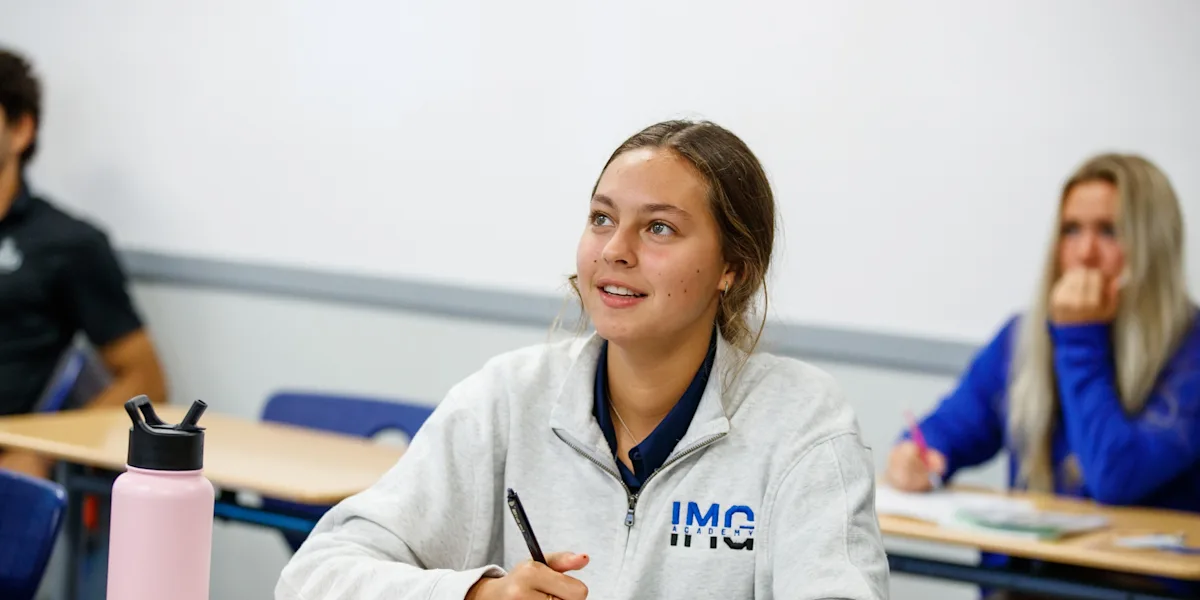
Vision training for athletes uses drills to develop the visual-cognitive skills needed to execute performance efficiently and optimally. The ability to see, think and do lends itself to every sport such as tracking a ball, anticipating a play, and reacting quickly. “Evidence-based research suggests that just as you would physically train to develop speed and technical and tactical skills, vision training as well is an element of performance that is necessary to optimally perform,” Cat Lutz, director of mental performance at IMG Academy. In reactive sports, those visual skills can shape how early you recognize what’s happening and how quickly you respond.
This guide covers what the research supports, which techniques fit different sports, how to measure progress, and what gear is worth considering.
Key Takeaways
Vision training targets how you process what you see, and how you respond to it through skills like tracking, depth perception, and reaction time.
A 2025 review of 33 studies found that gains often look bigger when the competitive moment matches the drill, which means the more you can utilize real world situations the higher the potential transfer can be
Different sports demand different visual skills, so a baseball hitter and a point guard benefit from different vision training drills.
You can start most vision drills with basic gear like a ball, a ruler, or a partner.
What Is Vision Training for Athletes?
Vision training for athletes focuses on how you use what you see, not just how clearly you see it. Eyesight is about seeing a still object clearly, like the letters on an eye chart. Visual-cognitive skill is how quickly you track a moving ball, recognize a pattern, and decide what to do next.
Picture a hitter picking up a pitch out of the pitcher’s hand. Clear eyesight helps, but the hitter also has to follow the ball, judge speed, and commit to a swing in a fraction of a second. Skills such as dynamic tracking, depth judgment, peripheral awareness, and reaction speed can all be measured and trained.
The important question is how much improvement in a training setting carries over to real competition. That’s where the evidence gets more nuanced, and the next sections dig into it.
Vision Training Techniques and How to Do Them
A 2024 study found that vision training for athletes often includes drills for:
Tracking
Depth perception
Reaction time
Hand-eye coordination
Decision-making skills that support performance
The five techniques below cover those core areas. Each one has a simple version you can try with a partner and a few basic items. “Vision training is not a tremendous time investment but the consistency in integrating it into your daily practice is key to see improvement,” said Lutz.
1. Dynamic Ball/Object Tracking
This trains smooth pursuit, or following a moving object without losing focus. It supports skills used when tracking a pitch, serve, or pass.
Try it: Mark a tennis ball with numbers or colored dots. Have a partner toss it from different angles and distances, then call out the mark you see just before you catch it. Start slowly, then add speed and unpredictability.
Optional gear: Marked training balls or a rebounder can add variety, but a regular ball and marker are enough to get started.
2. Peripheral Awareness Drills
Peripheral awareness is your ability to pick up movement outside your direct line of sight, such as a teammate’s cut or a defender closing in.
Try it: Keep your eyes on a fixed point, such as a mark on the wall or a partner’s face. A second partner holds up fingers or flashes a card off to one side, and you call out what you see without shifting your gaze.
Optional gear: Reaction lights can add another version of the drill, but they are not required.
3. Near-Far Focus Shifting
This works on shifting focus between close and distant objects, such as moving your attention from a nearby teammate to a target farther downfield.
Try it: Hold a card with small letters at arm’s length. Every few seconds, switch your focus between the card and a fixed point across the room, briefly bringing each one into focus before switching again.
Optional gear: Near-far charts can add structure, but any clear text and a distant target can work.
4. Reaction-Time Drills
Reaction drills challenge how quickly you respond after seeing a visual cue, such as a light, a partner’s hand, or a ball release.
Try it: Have a partner hold a ruler vertically between your thumb and finger, then drop it without warning. Catch it as quickly as you can and note where your fingers land.
Optional gear: Reaction-light apps or boards can add variety, but they are not necessary for a basic drill.
5. Depth Perception and Anticipation Practice
This drill pairs two skills: judging distance and closing speed, and reading early cues like a passer's shoulders to guess what comes next.
Try it: Have a partner throw or hit balls from different distances so you have to judge depth on every rep. Game film works well here too. Watch for patterns in how opponents set up a pass or a shot before they commit.
Optional gear: None required.
Vision Training by Sport: What Works Best Where
Different sports put different demands on your vision. A hitter may need to track a small, fast-moving ball, while a point guard has to monitor movement across a wider field of view. The table below shows practical ways to match the techniques above to common demands in each sport. “Remember this is skill development just like the physical skills you learn within your sport. Start small and build up reps as you continue to develop these areas,” said Lutz.
Sport | Primary visual demand | Techniques to consider |
Baseball/softball hitting, tennis | Tracking a small, fast-moving object | Ball/object tracking, reaction-time drills, depth perception drills |
Basketball, volleyball, football, soccer | Peripheral awareness and reacting to teammates and opponents | Peripheral awareness drills, reaction-time drills, anticipation practice |
Boxing, wrestling and other combat sports | Reading an opponent's movement and reacting fast | Peripheral awareness drills, reaction-time drills, anticipation practice |
Golf, precision-aim sports | Rapid shifts between a near sight picture and a far target | Ball/object tracking, near-far focus shifting, depth perception practice |
Climbing | Judging distance and spatial relationships | Near-far focus shifting, depth perception practice |
Start with one or two techniques that reflect the visual demands of your sport. You can add more later if they serve a specific need.
Does Vision Training Really Work, or Is It a Gimmick?
Vision training can lead to real, measurable improvement. The tricky part is whether that improvement shows up when it counts, like in a game. “Vision training is a great additional skill to integrate into your daily training,” said Lutz. “Whether it be a warm-up to achieve cognitive activation or an integrated drill in the practice environment that increases the potential for transferability.”
A 2025 review looked at 33 studies on vision training. It found something important: athletes showed bigger gains when the test matched the drill they'd practiced. When researchers tested a different skill, the gains shrank. The reviewers noted that some of this "improvement" might just be athletes getting good at the test itself, not getting sharper overall.
Here's what that means for you. Getting faster at a reaction drill doesn't guarantee you'll react faster in a real game. The better way to judge any vision program is to test yourself on something you didn't directly practice. Even better, pair that with results you can see on the field, like reading a play faster or making more consistent decisions under pressure.
For example, say you spend a month training with a reaction-light device, and your scores on that device improve by 20%. That's real progress, but it only tells you one thing: you've gotten better at that specific drill.
The better way to judge the effectiveness of that vision training is by measuring your reaction time during game play. If you're a tennis player, that might mean seeing whether you track the ball off your opponent's racquet better, not just whether you tap lights faster.
How IMG Academy Helps Student-Athletes Train Vision and Reaction
IMG Academy+ Essentials gives you expert-built mental performance content you can work into your training routine, along with progress tracking that helps you stay consistent. That structure can support the focus and decision-making involved in vision training for athletes.
IMG Academy+ Personal Coach adds individualized support through live one-on-one sessions with a credentialed mental performance coach. Your coach can help connect visual cues and reaction work to the demands of your sport.
Conclusion: Vision Training with Results You Can See
Vision training for athletes can improve visual and reaction skills, but gains in a drill do not always transfer cleanly to competition. Measure progress in improvements that show up during your sports practices and games.
Ready to build a more consistent routine? IMG Academy+ Essentials gives you expert-built mental performance content and progress tracking you can use on your schedule. For individualized support, IMG Academy+ Personal Coach connects you with an expert who can help you connect reaction work to the decisions your sport demands.
Frequently Asked Questions
Is Vision Training Real Sports Science or Just an Expensive Gimmick?
The science is real, but the results can be oversold. Research shows measurable gains on trained visual and reaction tasks, but some improvement may come from getting better at the test itself. A stronger test is whether progress carries over to a practice and game days.
Which Sports Actually Benefit from Training the Eyes Versus the Body?
Sports that depend on tracking, anticipation, and quick reactions, like baseball, softball, and tennis, may benefit most from vision training.
How Do I Measure Whether My Reaction Time Is Really Improving?
Test yourself on something you did not practice directly. If you trained with one reaction drill, use a different drill or a more game-like task to check progress. Track results over time and look for changes that show up outside the exercise itself.
Can Vision Training Help an Athlete Who Already Has 20/20 Sight?
Possibly. A 20/20 result measures how clearly you see a stationary target at a set distance. It does not measure every skill involved in tracking movement, shifting focus, reading patterns, or reacting to visual information.
How Long Until Vision Drills Show Up as Better On-Field Decisions?
There is no single timeline that applies to every athlete or drill. Research programs often measure change after repeated training, but improvement on a visual task does not guarantee the same change will appear in competition. Track progress over time and judge it by outcomes beyond the drill itself.
What Equipment Is Worth Buying Versus What's Overpriced Marketing?
You can practice many visual and reaction skills with simple tools such as a ball, cards, a ruler, and a training partner. Specialized apps and devices may add variety, but judge them by whether improvement carries over to tasks beyond the product’s own test.